REVIEW · HUE
Hue Imperial City Walking Tour: Citadel & Forbidden City
Book on Viator →Operated by Vietnam Legacy Tours · Bookable on Viator
Hue’s palace walls start talking with a guide. This Hue Imperial City walking tour takes you through the UNESCO-listed grounds at a pace where you can actually hear the stories behind each wall and gate.
I really like the small-group size (max 8), which makes it easier to ask questions and keep your bearings in a space that can feel huge once you’re inside. And I like that the tour is built around key “why this matters” moments—so the Nguyen Dynasty details land instead of floating past.
One thing to plan for: the Imperial City entrance fee isn’t always included. For the group option you’ll pay 200,000 VND per person, and the tour notes that you may get better value with a combo ticket for Citadel and tombs.
In This Review
- Quick hits for your Hue itinerary
- Why this Hue Imperial City walk feels easier than DIY
- Price and tickets: what $9 really means
- How the 2.5-hour route is paced (and why that matters)
- Stop-by-stop: Noon Gate through Thai Hòa Palace
- Cửa Ngo Môn (Noon Gate): the gate that sets the rules
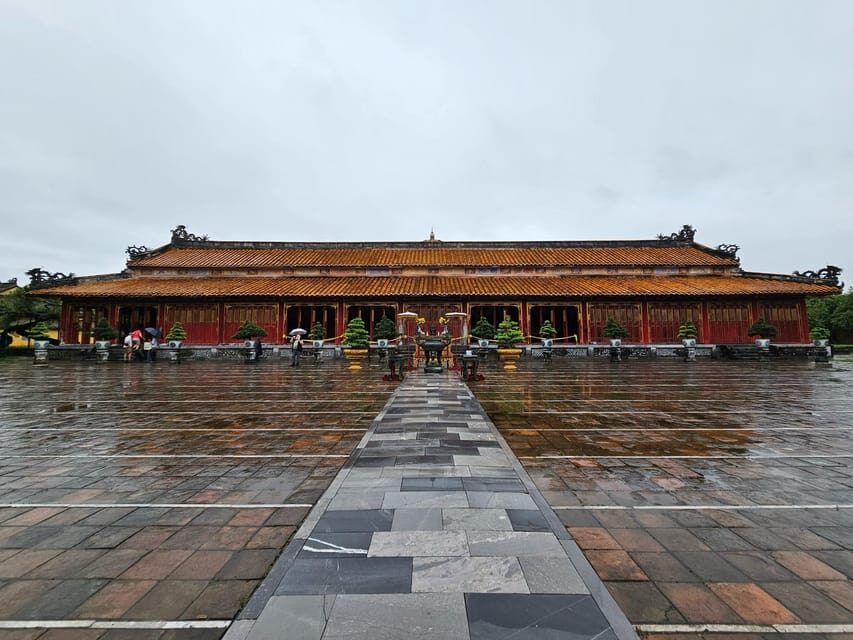
- Thai Hòa Palace: where court sessions and coronations happened
- From pavilions to urns: the royal details you’d miss otherwise
- Hien Lâm Pavilion: built to honor the emperors
- Nine Dynastic Urns: power given a physical form
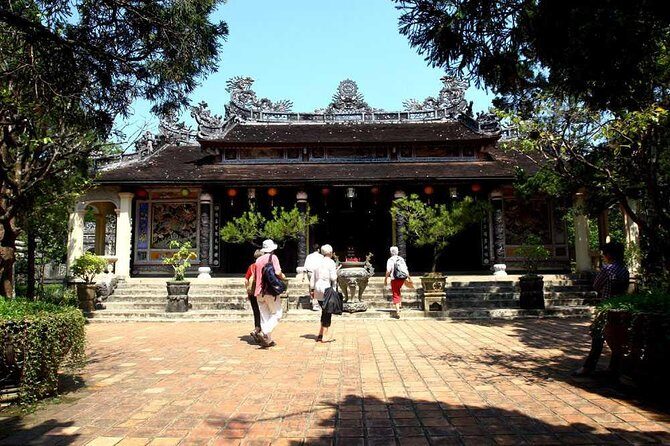
- Mieu Temple: ancestral tradition kept alive
- Cửa Chương Đức (Chuong Duc Gate): the women’s gate
- Forbidden Purple City and the royal family enclosure
- Hue Royal Palace / the Forbidden Purple City: private space, strict boundaries
- Kiến Trung Palace: the newly restored centerpiece
- Peaceful Palace, the Royal Garden, and the final gates
- Thai Bình Pavilion (Thai Binh Lâu): reading, scenery, and calm
- Thieu Phương Garden: royal strolling space
- Cửa Hiển Nhơn (Hien Nhơn Gate): mandarins enter, the story ends
- Guides make the difference: what to look for
- Who this walking tour is best for
- Should you book this Hue Imperial City: Citadel & Forbidden City tour?
- FAQ
- What’s the duration of the Hue Imperial City walking tour?
- How many people are on the tour?
- Is the Imperial City entrance fee included in the price?
- Does the tour include meals?
- What stops are included on the route?
- Is the tour dependent on weather?
- What’s the cancellation policy for a full refund?
Quick hits for your Hue itinerary
- Max 8 people keeps the walk personal and the explanations clear.
- A full arc of the royal city: Noon Gate to the end at Hien Nhơn Gate.
- Big court moments at Thai Hòa Palace, where emperors held sessions and coronations.
- Gate facts that change how you see the site, including Cửa Chương Đức used exclusively by women.
- Newly reopened Kien Trung Palace after careful restoration.
- You’ll match the tour to your day with options like private tours, sunrise/sunset, family-friendly formats, and even a meal add-on.
Why this Hue Imperial City walk feels easier than DIY
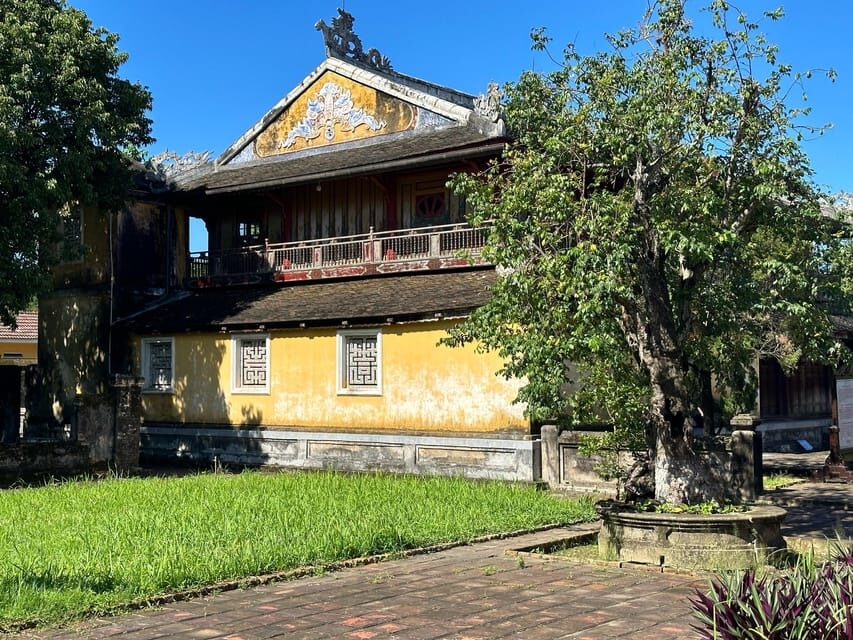
Hue’s Imperial City is one of those places where you can wander for a long time and still feel like you only saw walls. With a guide, you start connecting the dots: who used each space, what ceremonies happened there, and what the layout was designed to control.
A standout feature here is the small-group format. You won’t be squeezed into the loud “follow-the-leader” style. Instead, you get time to look closely at details like pavilions and urns, and you’re encouraged to ask questions when something clicks—or when you’re stuck.
I also appreciate the practical promise built into the experience: you should be able to get oriented fast. The tour doesn’t just list sights; it teaches you how to read the site, so you’re less likely to get turned around after one enclosure turns into another.
Other Imperial City and Citadel tours in Hue
Price and tickets: what $9 really means
The tour price is listed at $9.00 per person, and it’s a strong value for the guided walking time. But there’s one catch that matters more than almost anything: entrance fees.
Here’s how it works from the information provided:
- Entry to the Imperial City is 200,000 VND per person for the group tour option (not included in the base tour price).
- For the private tour option, an Imperial City entrance ticket is included (not for the group option).
- The tour also points out you might want a COMBO ticket since it can be better value for the Citadel and tombs.
So, if you’re trying to budget: don’t just compare the $9 fee to other tours. Compare it to what you’ll pay at the gate. If you’re in a solo or small group situation, the private option can make sense if it absorbs that entrance cost.
How the 2.5-hour route is paced (and why that matters)
The walk is about 2 hours 30 minutes and is capped at 8 travelers. That matters because the Imperial City is not “one straight line.” It’s layered: gates, enclosures, ceremonial halls, family areas, and restored spaces all in one compound.
The route also ends at a different point than it starts. You begin at Hai Mươi Ba Tháng Tám, Thuận Hòa, Huế, and the tour finishes at 46 Đinh Công Tráng. If you like to plan your next stop (coffee, lunch, or a rideshare), this “start-to-finish” approach is helpful.
Another practical note: it’s described as near public transportation. That’s useful in Hue, where you might be bouncing between sights and don’t want to fight logistics.
Stop-by-stop: Noon Gate through Thai Hòa Palace
Cửa Ngo Môn (Noon Gate): the gate that sets the rules
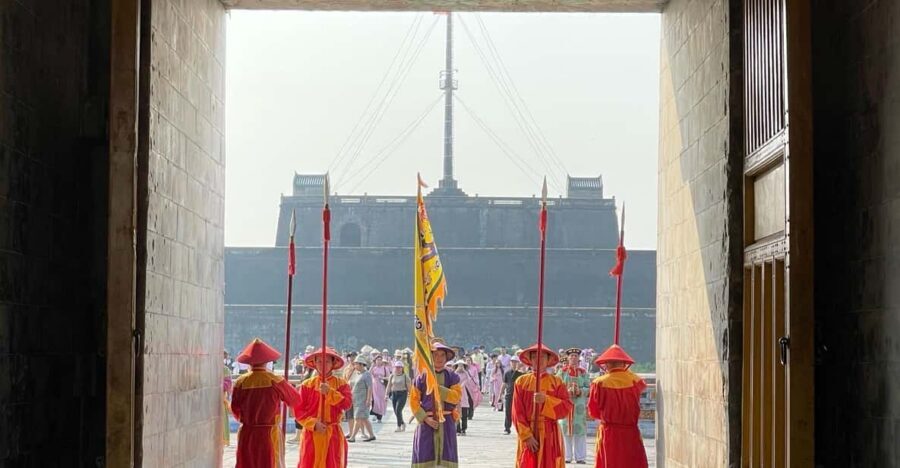
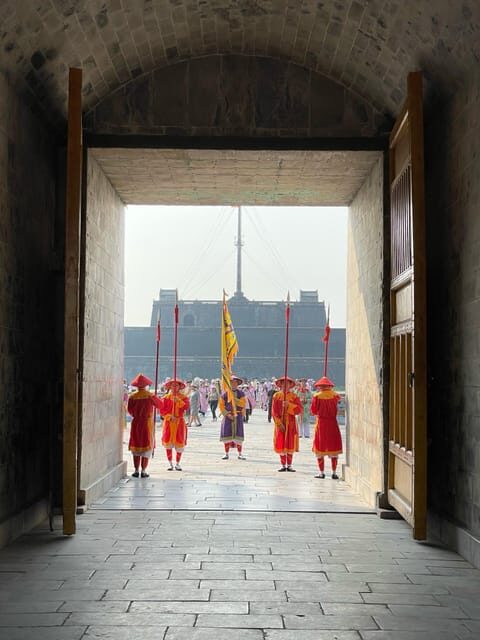
You start at the Noon Gate, also called Cửa Ngo Môn. This gate isn’t treated like a random entrance—your guide frames it as a symbolic gateway used for royal ceremonies and major events during the Nguyen Dynasty.
Why this first stop matters: once you understand what the gate represents, the rest of the walk stops feeling like a scavenger hunt. You start thinking like the site was designed to be used—by hierarchy, by ritual, by controlled movement.
Other walking tours we've reviewed in Hue





Thai Hòa Palace: where court sessions and coronations happened
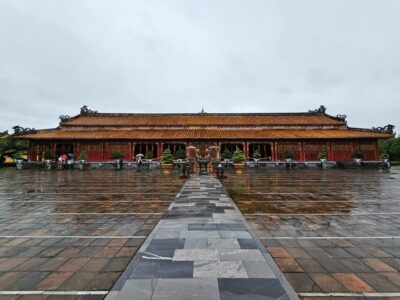
Next is Thái Hòa Palace, described as the most important hall in the Imperial City. This is where emperors held grand court sessions and where major events like coronations took place.
In a place like this, the big risk on your own is missing the point of the space. A guided explanation changes how you look at the architecture and the function. You’re not just seeing a hall; you’re learning how power and ceremony were staged inside it.
From pavilions to urns: the royal details you’d miss otherwise
Hien Lâm Pavilion: built to honor the emperors
The Hien Lâm Pavilion is presented as over 200 years old, built to honor the Nguyen emperors. Your guide explains its cultural significance and how its design relates to what the empire wanted to communicate.
This is one of those stops where a guide helps you slow down. You get a reason to notice shape, placement, and the “why here?” feeling of it.
Nine Dynastic Urns: power given a physical form
Then come the Nine Dynastic Urns—bronze urns connected to the legacy of the nine emperors of the Nguyen Dynasty. You’ll hear what the urns symbolize and how they fit into the dynasty’s long memory.
If you like history that’s not just dates, this stop is for you. Objects like this help you understand how authority was remembered.
Mieu Temple: ancestral tradition kept alive
At the Mieu Temple, you visit the ancestral temple dedicated to past Nguyen kings. The tour focuses on how royal traditions were preserved in a sacred space.
This is also where the Imperial City shifts from “public ceremony” to “lineage and continuity.” A guide helps you feel that change instead of treating it as just another building.
Cửa Chương Đức (Chuong Duc Gate): the women’s gate
You’ll also see Cửa Chương Đức, described as one of the four gates of the Imperial City and used exclusively for women.
Even if you don’t know Vietnamese history well yet, this is the kind of fact that reorients your understanding of the layout. It tells you the compound had different rules for different people, and that the built environment reinforced those boundaries.
Forbidden Purple City and the royal family enclosure
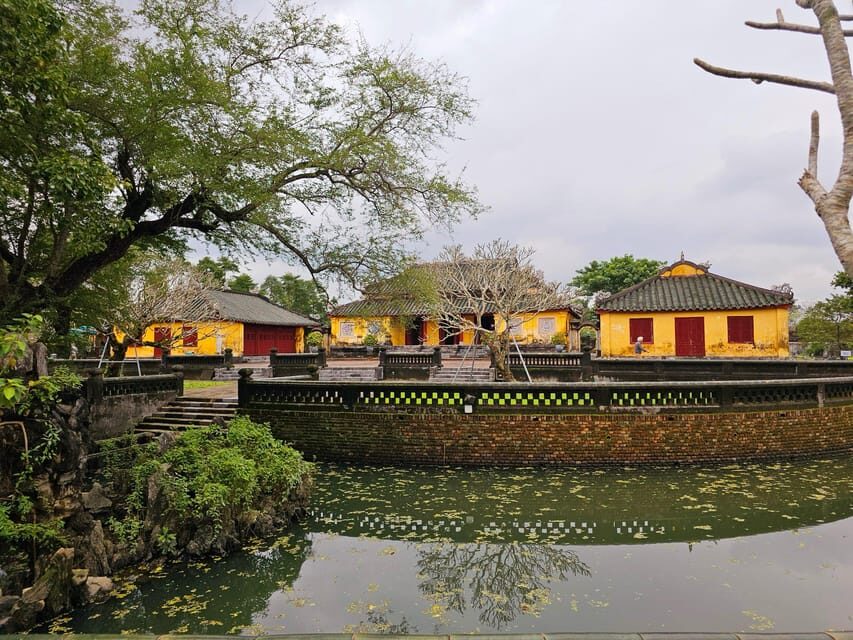
Hue Royal Palace / the Forbidden Purple City: private space, strict boundaries
The tour’s big interior shift happens when you reach the Hue Royal Palace, also referred to as the Forbidden Purple City. This is described as the third enclosure within the Imperial City, and it’s exclusively for the king’s family, including his wives and children.
What you’re likely to appreciate here is the storytelling approach. You hear how the palace enclosure worked as a separate world—one designed for privacy and control, not casual wandering.
For visitors who care about how life actually operated in historic courts (not just what kings wore in paintings), this segment tends to be the turning point.
Kiến Trung Palace: the newly restored centerpiece
Next is Kiến Trung Palace, described as newly restored and recently reopened after years of careful reconstruction. It’s presented as a grand imperial residence.
Restoration changes what you can meaningfully see. This stop is especially useful because it gives you a clearer impression of what the space is meant to look like now, while a guide can help you connect that back to its original purpose.
Peaceful Palace, the Royal Garden, and the final gates
Thai Bình Pavilion (Thai Binh Lâu): reading, scenery, and calm
Then you reach Thai Binh Pavilion (Thai Binh Lâu), also described as Peaceful Palace. This is where the king would read books and enjoy the scenery.
This stop is a nice rhythm shift. The tour doesn’t keep you only in ceremony mode; it also shows you the quieter, daily-life side of royal space—at least as represented by how the buildings were used.
Thieu Phương Garden: royal strolling space
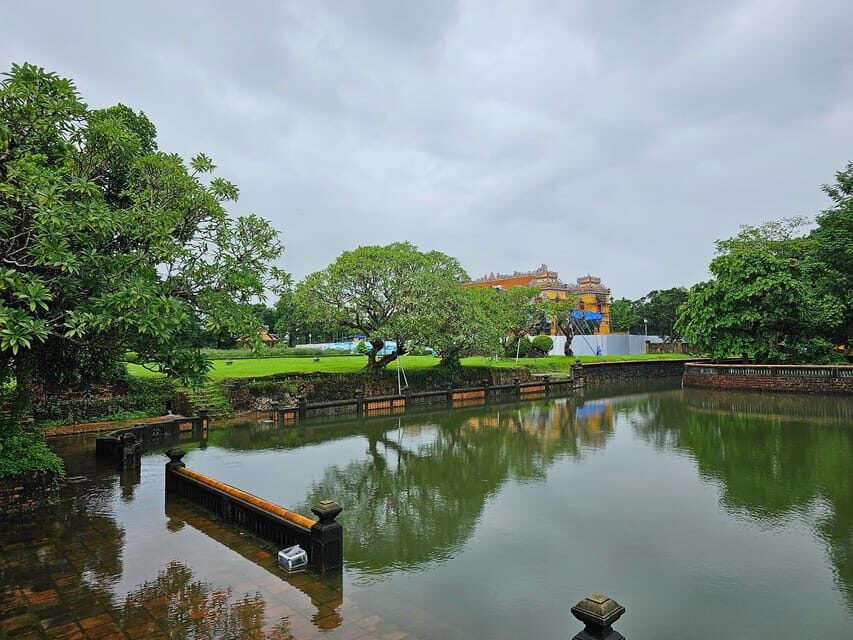
After that comes Thieu Phương Garden, also known as the Royal Garden. It’s noted as restored with eye-catching scenery, and it was a place for the king and family to stroll and enjoy the views.
A guide helps here because gardens can be confusing if you don’t know what you’re meant to notice. You’re not just looking for pretty plants—you’re learning what kind of leisure was built into the palace world.
Cửa Hiển Nhơn (Hien Nhơn Gate): mandarins enter, the story ends
Finally, the tour concludes at Cửa Hiển Nhơn, described as the entrance used by mandarins. It’s a good closing image: a gate tied to the people who ran the empire day-to-day.
Ending on a functional access point is smart. You finish with a sense of how court life connected to administration beyond the palace walls.
Guides make the difference: what to look for
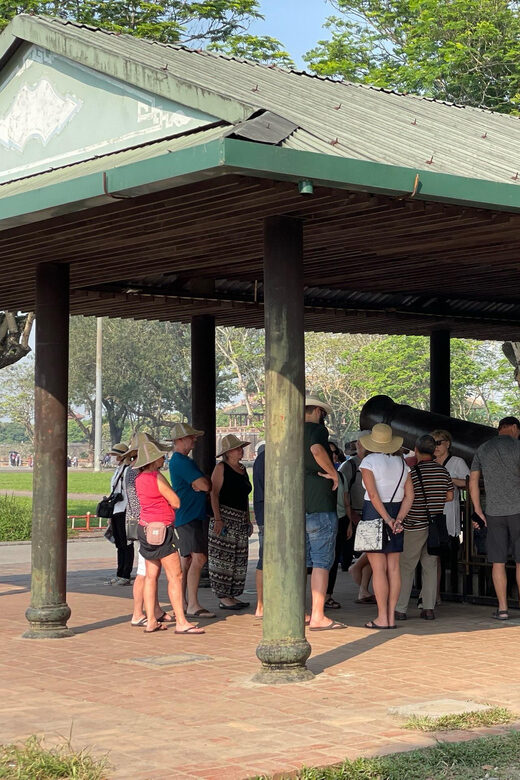
The experience notes personalized attention and a small group size, and the reviews reflect consistent praise for guides who explain clearly and answer questions. Names mentioned in the information include Ngoc, Hoa, Linh, Matthew, Florence, Sue, and Xi—so you might see one of these guides on your date.
From the pattern of feedback you can plan your own strategy:
- Bring curiosity. When you hear a fact about a gate or enclosure, ask one follow-up question.
- Use the walk to get orientation. If you’re starting to feel lost, say it early. A good guide will adjust.
- If photos matter, bring your phone/camera ready—some guides are specifically noted for helping people get good pictures during the walk.
The one possible drawback hinted in the information: like any guided experience, guide energy can vary. If you notice a guide splitting attention, you can still get value by asking direct questions to bring the focus back on you and your pace.
Who this walking tour is best for
This is a great fit if:
- You want the Hue Imperial City to make sense fast, with context for the Nguyen Dynasty.
- You care about how power, ritual, and daily life shaped architecture.
- You prefer a 2.5-hour structured walk instead of bouncing between sights on your own.
It can also work well for families and younger history fans, since the tour offers a family-friendly upgrade. And if you like flexibility, there are options like private tours and sunrise or sunset versions.
Should you book this Hue Imperial City: Citadel & Forbidden City tour?
Book it if you want your money to turn into understanding. For a base price of $9, the only real variable is the Imperial City entrance fee (group option adds 200,000 VND). If you’re not planning a separate tomb visit, you can still make this worthwhile by using the guide to learn what you’ll otherwise miss.
I’d recommend booking this over a DIY wandering day if:
- You’re short on time in Hue.
- You like history that connects people and places (not just plaques).
- You want the Imperial City’s layout explained in plain terms.
Skip it or consider a different format if:
- You hate walking in heat and want a lighter pace (this is a walking tour, and good weather is required).
- You’re determined to go fully self-guided and already know the key story beats of the Nguyen Dynasty’s palace world.
If you do book, show up ready to ask questions. The best payoff comes when you let the guide turn gates, urns, palaces, and gardens into a coherent story you can still picture later.
FAQ
What’s the duration of the Hue Imperial City walking tour?
The tour is listed as about 2 hours 30 minutes.
How many people are on the tour?
The group size is capped at a maximum of 8 travelers.
Is the Imperial City entrance fee included in the price?
It depends on the option. The Imperial City entrance ticket is included for the private tour option, but for the group tour option you pay 200,000 VND per person. The tour also notes you may want a COMBO ticket for better value for Citadel and tombs.
Does the tour include meals?
Meals are not mentioned in the provided tour details.
What stops are included on the route?
The walk goes from Noon Gate (Cửa Ngo Môn) through highlights like Thái Hòa Palace, Hien Lâm Pavilion, Nine Dynastic Urns, Mieu Temple, Cửa Chương Đức, the Forbidden Purple City / Hue Royal Palace, Kiến Trung Palace, Thai Binh Pavilion, Thieu Phương Garden, and ends at Cửa Hiển Nhơn.
Is the tour dependent on weather?
Yes. The tour requires good weather. If it’s canceled due to poor weather, you’ll be offered a different date or a full refund.
What’s the cancellation policy for a full refund?
Free cancellation is available up to 24 hours in advance for a full refund. If you cancel less than 24 hours before the start time, the amount paid is not refunded.
You Might Also Enjoy

More Tours in Hue
- Easy Rider private tour via Hai Van pass from Hue – Da Nang – Hoi An (1Way|Loop)
★ 5.0 · 1,542 reviews



More Tour Reviews in Hue
- Easy Rider private tour via Hai Van pass from Hue – Da Nang – Hoi An (1Way|Loop)
★ 5.0 · 1,542 reviews