REVIEW · HUE
Hue Imperial City Walking Tour 2.5 Hours
Book on Viator →Operated by Phong Nha Locals Travel & Transport · Bookable on Viator
Most tours skim the stones. This one reads the palace.
In about 3 hours, you walk through Hue’s Imperial Citadel complex and get a guided explanation of how the Nguyen Dynasty used feng shui, architecture, and royal ceremony to run an empire. You’ll also get historical context that reaches beyond the palace walls, including discussion of the Vietnam War.
I particularly like two things: the feng shui focus, explained in a way that helps you understand the layout instead of just naming buildings; and the guide’s court-life storytelling, covering the royal world of emperors, concubines, and eunuchs. You’re not stuck at one spot either—the walk moves you past major highlights and their roles.
One consideration: the tour price does not include the Hue Imperial City entrance fee, so you’ll need to budget extra (cash/cards rules aren’t listed, so just plan to be ready to pay on-site). Also, since it’s a good-weather-dependent walk, you may want a light rain plan if conditions look questionable.
In This Review
- Key highlights at a glance
- Why Hue Imperial City feels different with a guide
- Before you go: price, timing, and what you must pay
- Feng shui and the Nguyen Dynasty’s choice of Hue
- Walking through the citadel: your route and pacing
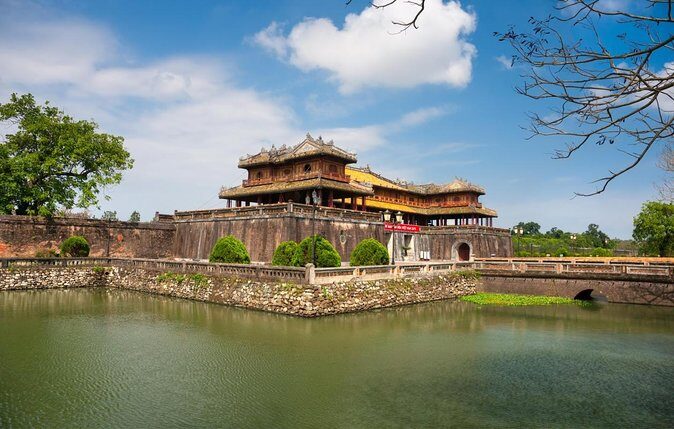
- Ngo Mon Gate: the ceremonial “front door” you actually understand
- Nine Holy Cannons: power and ceremony in the same space
- Royal Family Temple and the court’s everyday meaning
- The Royal Library: learning, records, and authority
- Royal Lake and the Royal Theater: ceremony as performance
- The Forbidden City complex: hierarchy you can feel
- Vietnam War context and the end of an empire
- What I’d bring and how to get the most out of it
- Should you book this Hue Imperial City walking tour?
- FAQ
- How long is the Hue Imperial City walking tour?
- What does the tour cost?
- What’s included in the price?
- Is the Hue Imperial City entrance fee included?
- Where does the tour start and end?
- How big is the group?
- What’s the cancellation and weather policy like?
Key highlights at a glance
- Feng shui explained on the ground: you’ll connect the geometry of the citadel to why Hue mattered.
- Nguyen Dynasty court life, not just dates: emperors, concubines, and eunuchs are part of the story.
- Major monuments in one focused walk: Nine Holy Cannons, Ngo Mon Gate, royal library, royal lake, and royal theater.
- A small group size: maximum of 12 travelers keeps the pace friendly.
- Admission ticket is separate: the tour is $27, but you’ll still need the site entry fee.
Why Hue Imperial City feels different with a guide
Hue’s Imperial Citadel can look like a maze at first—big walls, ceremonial gateways, and a lot of “what am I looking at?” When someone breaks the place into functions and meanings, it clicks fast. That’s the real value here: the guide doesn’t just point out structures. They explain why the Nguyen Dynasty arranged these spaces the way they did.
I love that the tour frames the Nguyen Dynasty as a political and cultural system, not only a timeline. You’ll also hear how Hue was chosen as a capital and how the empire’s approach differed from other dynasties in Vietnam and China. In other words, it’s not history class trivia—it helps you understand what the buildings were built to do.
And the storytelling element is key. This tour specifically includes stories tied to royal life, including the roles and daily realities around emperors, concubines, and eunuchs. Even if you have zero background, the guide makes court life feel human and legible rather than distant.
Other Imperial City and Citadel tours in Hue
Before you go: price, timing, and what you must pay
This is priced at $27 per person, and the tour runs about 3 hours (the walk portion is listed as 2.5 hours). There are two start times: 8:30 am and 2:00 pm. You’ll meet at Lạc Thiện Restaurant at 6 Đinh Tiên Hoàng, Phú Hòa, Huế, Thành phố Huế, Vietnam, and the tour ends back at the meeting point.
What’s included is simple: one bottled water per person and an English-speaking guide. What’s not included is the site entrance fee for Hue Imperial City (the Citadel), listed as ₫200,000 per person.
If you want the quick value math: you’re paying for an English guide and a structured walk of major zones inside the complex. The separate admission fee is the part you have to budget for either way if you plan to go inside.
Also keep an eye on weather. The experience notes that it requires good weather, and if it’s canceled due to poor conditions you’ll be offered a different date or a full refund. For a walking tour, that matters more than you might think.
Feng shui and the Nguyen Dynasty’s choice of Hue

One of the tour’s strongest themes is that you’re not just visiting a “cool palace site.” You’re learning how the Nguyen Dynasty used feng shui thinking and architecture to shape authority. That means you’ll hear explanations about the setting of the Hue Imperial Citadel and why the Nguyen chose Hue as the capital.
Here’s what that does for you as a visitor: it changes how you look. Instead of treating gates and halls as random landmarks, you start asking questions like: where does power sit? how does movement through space reinforce hierarchy? how does symbolism guide everyday ceremony?
You’ll also get a comparison angle—how the Nguyen Dynasty’s approach differed from other dynasties in Vietnam and China. That’s helpful because Hue can feel like it’s repeating themes you’ve seen elsewhere in Vietnam, but with a distinct “house style.” The guide’s focus helps you notice what’s specifically Nguyen and what’s part of wider regional patterns.
Walking through the citadel: your route and pacing
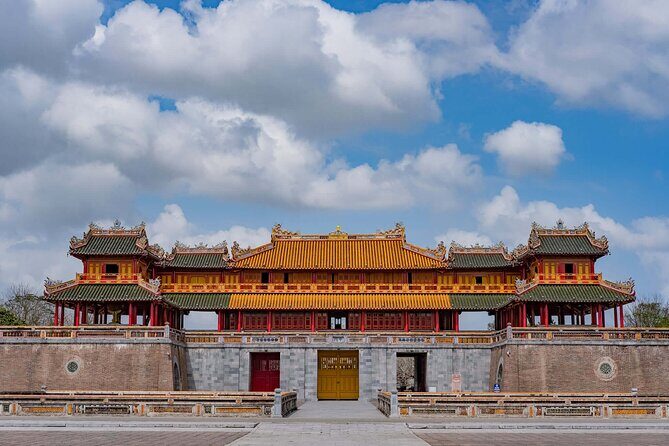
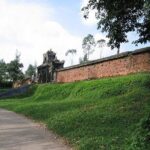
The tour stays centered on the citadel complex, including the Hue Imperial City (the Citadel), the royal city, and the forbidden city complex. Even though everything is within one larger area, the guide breaks it into sections with a clear logic: what each part is for and what you should pay attention to in each zone.
You’ll move at a pace that works for most people. The group cap is 12 travelers, which usually means you won’t feel like you’re sprinting behind a parade of strangers. You should still wear comfortable shoes, because you’ll be walking between multiple highlight points in a fixed time window.
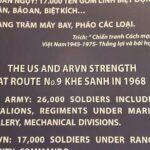
The tour also includes stories and context that connect the palace to broader Vietnamese history. The overview explicitly includes discussion of the Vietnam War, and it’s presented as part of understanding the full arc of the Nguyen Dynasty—from formation to disintegration, covering 1802 to 1945.
If you like guided pacing and you want to understand the place instead of just photographing it, this route style fits well.
Ngo Mon Gate: the ceremonial “front door” you actually understand
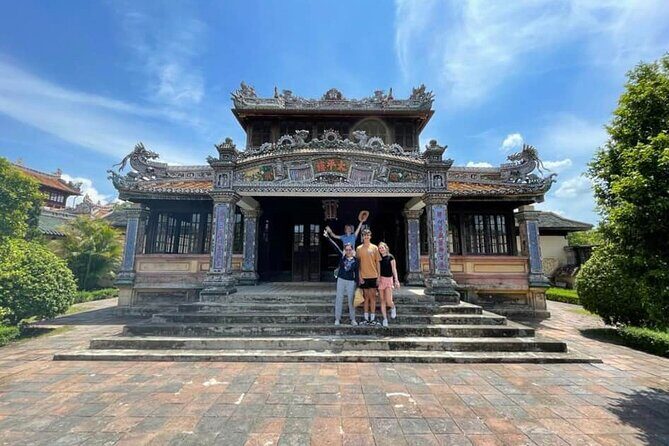
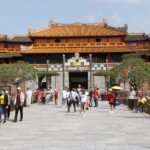
Ngo Mon Gate is one of those highlights you’ve probably seen in photos—but the guide’s job is to make it make sense. In a palace complex like Hue, a major gate isn’t just an entry point. It’s a message, built to control where people go and what roles are allowed to approach.
As you stand near places like Ngo Mon Gate, you’ll hear explanations about how the Nguyen Dynasty organized royal spaces and how those spaces supported court life. This is where the tour’s feng shui and architectural themes start paying off visually. Once you understand what the gate represents, the rest of the complex becomes easier to decode.
What to watch for: pay attention to how the guide describes the function of different areas. That’s the difference between seeing a gate and understanding a system.
A small drawback: if you’re the kind of traveler who wants free time to roam, a guided circuit with set stops can feel a little structured. But the upside is clarity—you get the logic before you get lost.
Other walking tours we've reviewed in Hue





Nine Holy Cannons: power and ceremony in the same space

Nine Holy Cannons are a signature highlight of the Hue Imperial Citadel complex. Even if you don’t care about military history, objects like this can change your understanding of the palace. They remind you that royal authority wasn’t only symbolic. It was backed by real power and real control.
The tour’s angle is to connect what you see to how the Nguyen ran the empire. The guide tells you what these major elements mean in the context of the imperial complex, tying them to royal life and the functioning of the citadel.
If you enjoy spot-by-spot learning—turning each monument into a lesson—you’ll like this part. The cannons also provide good contrast with more “decorative” areas. Instead of the citadel being only about aesthetics, you get a fuller sense of how the empire prepared for order and control.
Royal Family Temple and the court’s everyday meaning
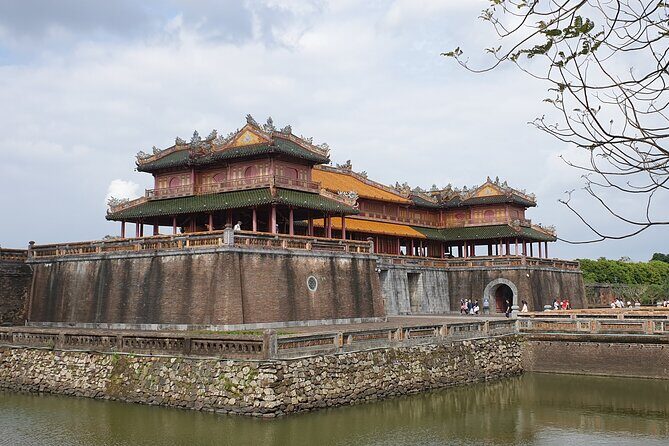
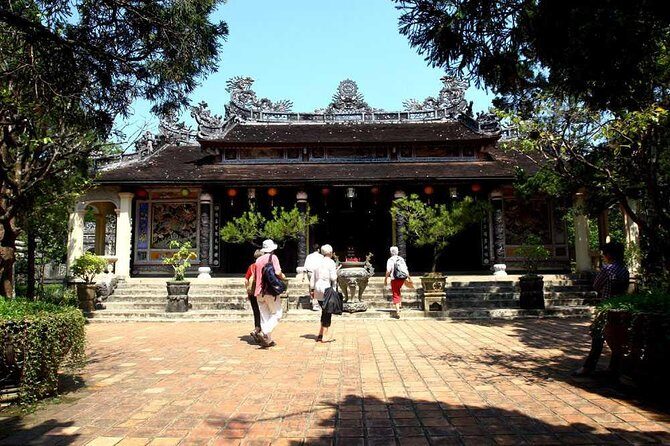
The Hue Royal Family Temple is one of the stops designed to explain how belief, lineage, and politics were woven together. A temple within a royal complex isn’t just a quiet place. In many imperial systems, it’s part of maintaining legitimacy and continuity.
During the walk, the guide explains the formation and disintegration of the Nguyen Dynasty (1802 to 1945) and how the imperial setting supported that long arc. That means the temple isn’t treated like a standalone sight. It becomes part of the broader story about rule.
I like that the tour connects architecture to governance. You’re learning what people were doing inside these walls and why those actions mattered, not just what the building is called.
The Royal Library: learning, records, and authority
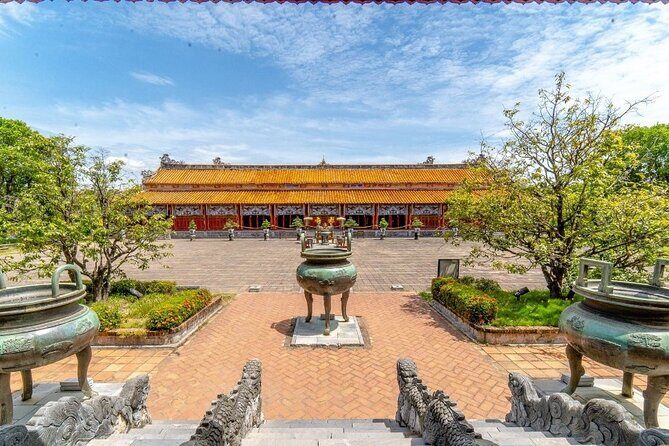
The Royal Library stop helps you see another side of the palace. Libraries in royal settings aren’t just for reading. They connect to administration, education, and keeping knowledge aligned with state power.
The guide’s explanations support the tour’s larger theme: each part of the citadel complex has a function. That’s a big deal for visitors, because it prevents the typical “I saw cool buildings” reaction and replaces it with “I know why these buildings exist.”
If you’re a history-leaning traveler who likes understanding how states operated, you’ll probably enjoy this more than you expect. It’s not only war and spectacle. It’s administration and identity.
Royal Lake and the Royal Theater: ceremony as performance
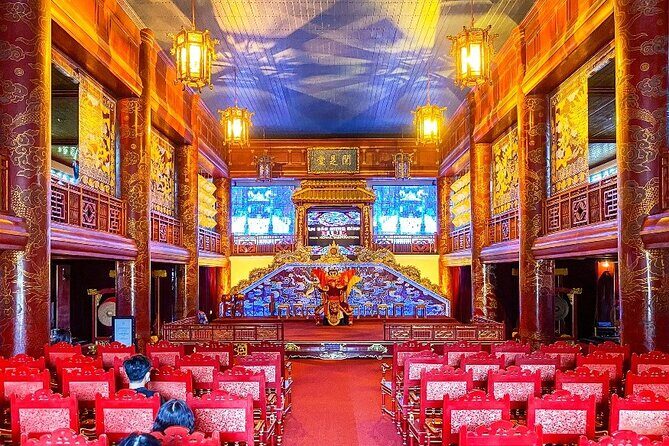
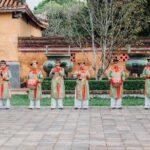
The Royal Lake and the royal theater bring a different mood to the tour. Palaces often look rigid and formal on the outside, but ceremonial life includes staging—movement, audience, and ritual timing. A lake area and a royal theater help you imagine how the court experienced public and private moments.
The guide’s stories about emperors and court life add context, so you’re not staring at a pretty spot without knowing why it’s there. The royal theater stop is especially good if you like the idea of history as lived experience: power isn’t only in rules—it’s in what the empire chose to celebrate and display.
Practical note: this segment can feel more “walk and listen” than “walk and photo,” so be ready to focus on the guide’s explanation.
The Forbidden City complex: hierarchy you can feel
Inside the royal complex, the tour also covers the forbidden city complex. That phrasing matters because it suggests separation—who was allowed where, and what happened when you crossed invisible lines.
You’ll also hear about roles inside the royal world, including concubines and eunuchs. The guide explains how royal life worked and what the court system was like, including the difference between how the Nguyen Dynasty approached power compared to other dynasties.
For me, this is where the tour becomes more than architecture. It becomes a story about control and boundaries. You start to understand the citadel not just as a collection of buildings, but as a machine for organizing people and behavior.
Vietnam War context and the end of an empire
The overview includes learning more about the Vietnam War, and the tour also covers how the Nguyen Dynasty formed and later disintegrated from 1802 to 1945. That’s a reminder that imperial space doesn’t exist in a vacuum.
Even without getting lost in dates, you’ll gain a sense of how political change reshaped the meaning of the citadel over time. If you’re traveling in Vietnam and you want a deeper link between eras—pre-modern courts to modern conflict—this tour gives you that bridge in a way that fits into a short, walkable format.
What I’d bring and how to get the most out of it
This tour is built around walking and listening, so you’ll do best with a few basics.
- Wear shoes you can move in for a few hours.
- Bring a refillable water bottle if you like, even though bottled water is included.
- Have your entrance fee ready since it’s not included in the $27 tour price.
- If rain threatens, be realistic. The experience is weather-dependent.
To get maximum value, I’d treat the tour like a guided “reading session.” Ask yourself as you walk: what does this place do? who is it for? how does the layout enforce order? Those questions match exactly what the guide is set up to answer.
Should you book this Hue Imperial City walking tour?
I think you should book if you want more than photos. The strong point here is the English-speaking guide who explains feng shui, architectural function, and Nguyen court life (emperors, concubines, eunuchs) along with Vietnam War context and the dynasty’s rise and fall.
You might skip it if you only want independent wandering, or if you hate buying separate entrance tickets for a timed walk. The separate ₫200,000 admission fee is the only clear “gotcha,” and weather can also affect plans.
But if you’re the kind of traveler who likes understanding what you’re seeing, this is a solid use of time in Hue—small group, focused route, and an excellent guide experience that people consistently rate highly.
FAQ
How long is the Hue Imperial City walking tour?
It’s listed as about 3 hours total (with the walking tour portion described as 2.5 hours).
What does the tour cost?
The price is $27.00 per person.
What’s included in the price?
You get an English-speaking tour guide and 1 bottled water per person.
Is the Hue Imperial City entrance fee included?
No. The entrance fee is ₫200,000 per person and is not included in the tour price.
Where does the tour start and end?
It starts at Lạc Thiện Restaurant, 6 Đinh Tiên Hoàng, Phú Hòa, Huế, and ends back at the same meeting point.
How big is the group?
The tour has a maximum of 12 travelers.
What’s the cancellation and weather policy like?
You can cancel for a full refund up to 24 hours before the experience’s start time. The experience requires good weather; if it’s canceled due to poor weather, you’ll be offered a different date or a full refund.
If you want, tell me your travel dates and whether you prefer the morning or afternoon slot, and I’ll help you decide which start time fits better with the rest of your Hue day.
You Might Also Enjoy



More Tours in Hue
- Easy Rider private tour via Hai Van pass from Hue – Da Nang – Hoi An (1Way|Loop)
★ 5.0 · 1,542 reviews



More Tour Reviews in Hue
- Easy Rider private tour via Hai Van pass from Hue – Da Nang – Hoi An (1Way|Loop)
★ 5.0 · 1,542 reviews