REVIEW · HUE VIETNAM
Hue Imperial City Walking Tour: Citadel & Forbidden City
Book on GetYourGuide →Operated by Vietnam Legacy Tours · Bookable on GetYourGuide
Hue’s palace walls still feel powerful. This Hue Imperial City walking tour makes the Nguyen Dynasty readable, from Ngo Mon Gate to the Forbidden City structures. You’ll learn why the layout looks the way it does, and what each space was for in court life.
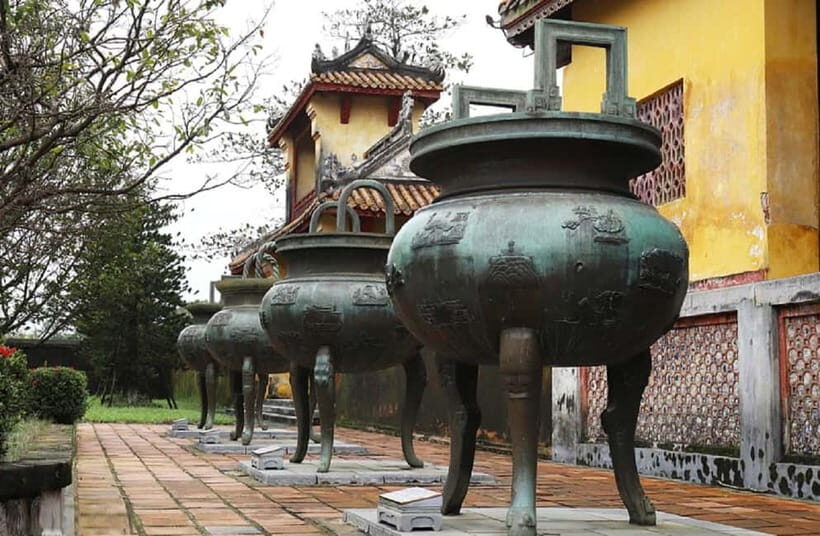
Two things I really like: the guide-led pacing through a huge site, and the way the tour connects architecture to real rules of power. If you’re with a guide like Ngọc, Ha, or Nhien, you’ll get clear context at stops such as Thái Hòa Palace (Harmony Palace) and the Forbidden City residence areas, not just a list of names.
One possible drawback: entry tickets and food/drinks aren’t included, so you’ll need to budget separately and plan around walking time on uneven palace grounds.
In This Review
- Key things to look forward to
- Why the Hue Imperial City makes more sense with a guide
- Meeting at the Four Cannons and entering through Cửa Ngô Môn
- Thái Hòa Palace: the court’s ceremony engine (and why it matters)
- Moving inside: Hien Lam Pavilion, Cửa Chuông Đức, and the gates-between-spaces story
- The Mieu Temple: where worship rules explain the Nguyen court
- Inside the Forbidden City: Kiến Trung Palace and royal family life
- After the palaces: Royal Theater, Thiệu Phương Garden, and the Royal Library
- How long the Hue Imperial City walk takes (and how to pace yourself)
- Price value: why $11 can be a bargain (and what costs extra)
- Who should book this tour (and who might want a different option)
- Should you book this Hue Imperial City & Forbidden City walking tour?
- FAQ
- How much does the Hue Imperial City: Citadel & Forbidden City walking tour cost?
- What’s included in the tour price?
- Are entry tickets included?
- How long does the tour last?
- What languages are the guides?
- Where is the meeting point?
- Is hotel pickup available?
Key things to look forward to
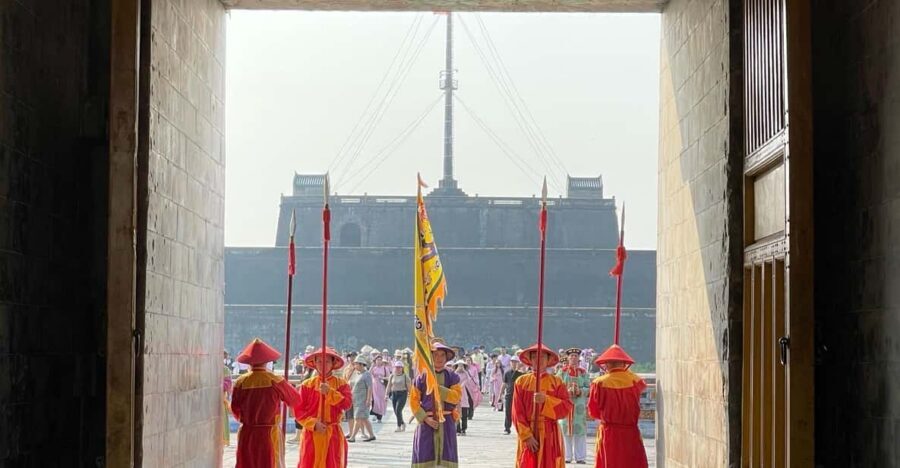
- Ngo Mon Gate as your starting point: you enter the complex the way court life was meant to begin—by gate, then by purpose.
- Thái Hòa Palace first: you get the ceremony space early, which makes the rest of the imperial layout easier to understand.
- Mieu Temple’s worship rules: it explains why not every royal figure was treated the same in emperor worship.
- Kien Trung Palace inside the Forbidden City: you’ll see the king’s family residence role, not just the “pretty palace” angle.
- Royal Garden, Royal Library, and theater: the tour doesn’t stop at monuments; it includes culture and daily court life cues.
- Small groups or private time: you often get enough room to ask questions and slow down when you want photos or details.
Why the Hue Imperial City makes more sense with a guide
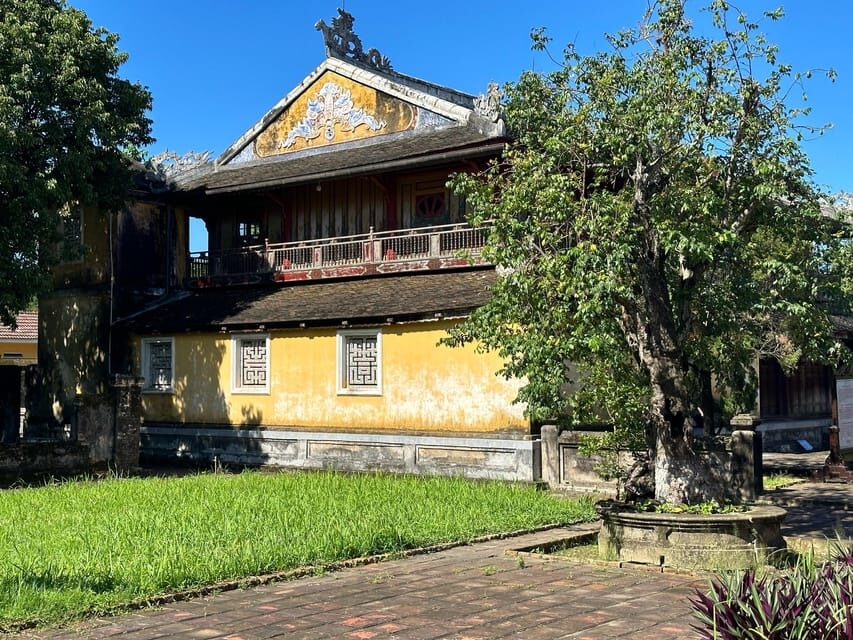
The Hue Imperial City is big, and it can feel like you’re wandering through repeating gates and walls if you go without context. With a guide, you start seeing patterns: hierarchy, ceremony, separation of spaces, and how the Nguyen Dynasty used architecture to control movement and meaning.
What makes this tour especially practical is that it’s built around “why” at each stop. The route is designed to help you understand court life step by step—so when you reach the Forbidden City areas, it’s not just another courtyard. It becomes a story you can follow.
Also, the tone is very human. Many guides on this tour are praised for strong communication and for answering questions without rushing you. If you get a guide like Ngọc, Sue, Hoa, or Au, you’ll likely notice the same theme: you’re not just looking at Vietnam’s past—you’re learning how it functioned.
If you're still narrowing it down, here are other tours in Hue Vietnam we've reviewed.

Meeting at the Four Cannons and entering through Cửa Ngô Môn
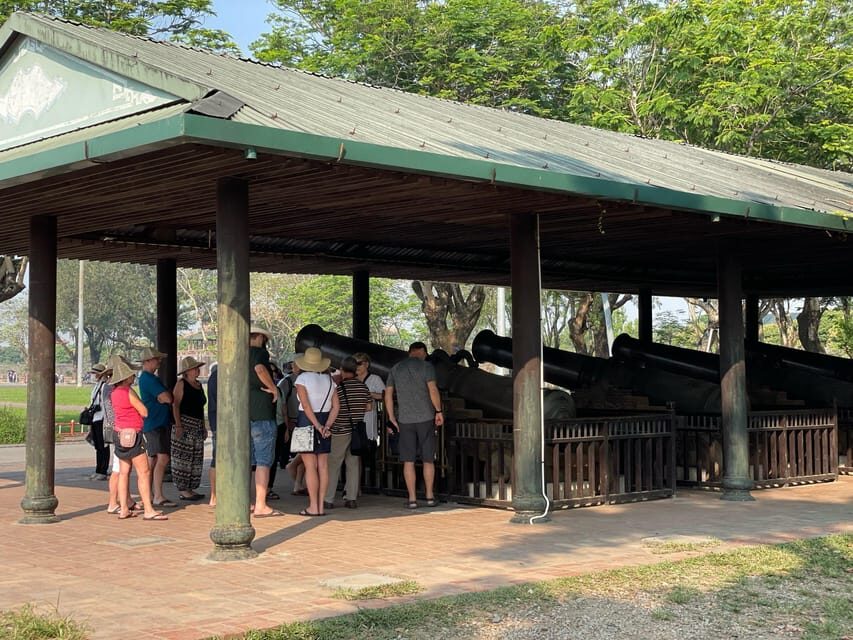
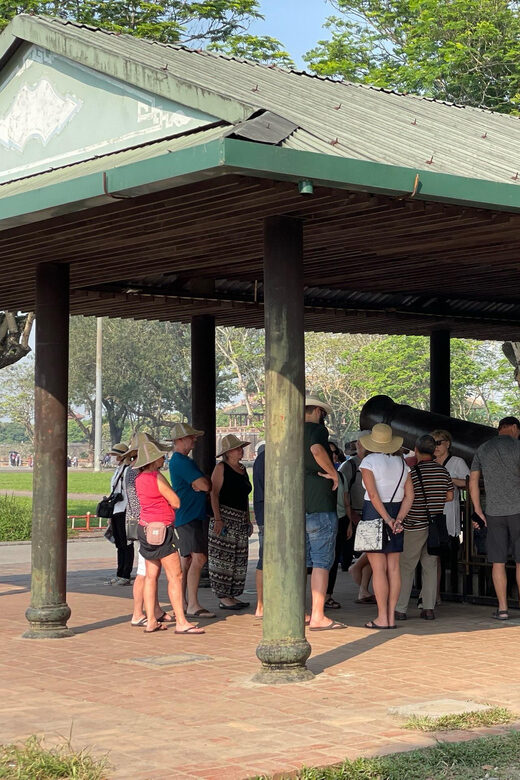
Before you even start walking, the meeting point matters here. On Google Maps, the location can be confusing—so use the provided detail: the tour meets at the 4 Cannons location, not the other cannon clusters you might see marked elsewhere.
The guide waits for you at that spot, and they can send you the correct map location if you share your WhatsApp number. If pickup is added, a driver and guide can collect you from your hotel, but you’ll still want to be ready with your hotel name and WhatsApp number so the handoff is smooth.
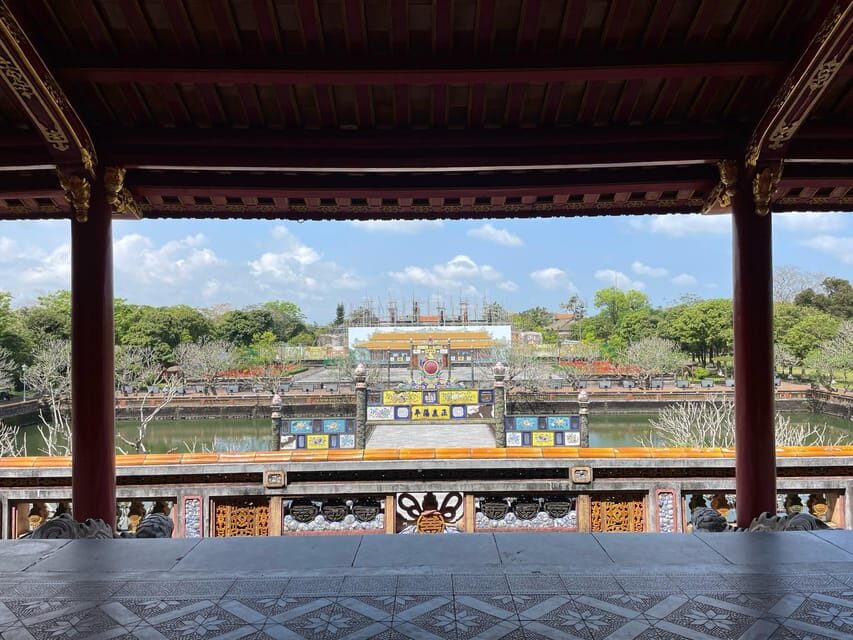
Once you start, your first big moment is the walk into the Imperial City via Ngo Mon Gate (Cửa Ngô Môn). This isn’t just a photo stop. It sets the mood and clarifies the geography: gates are boundaries in Hue, and the tour uses that fact to keep the route easy to follow.
Thái Hòa Palace: the court’s ceremony engine (and why it matters)
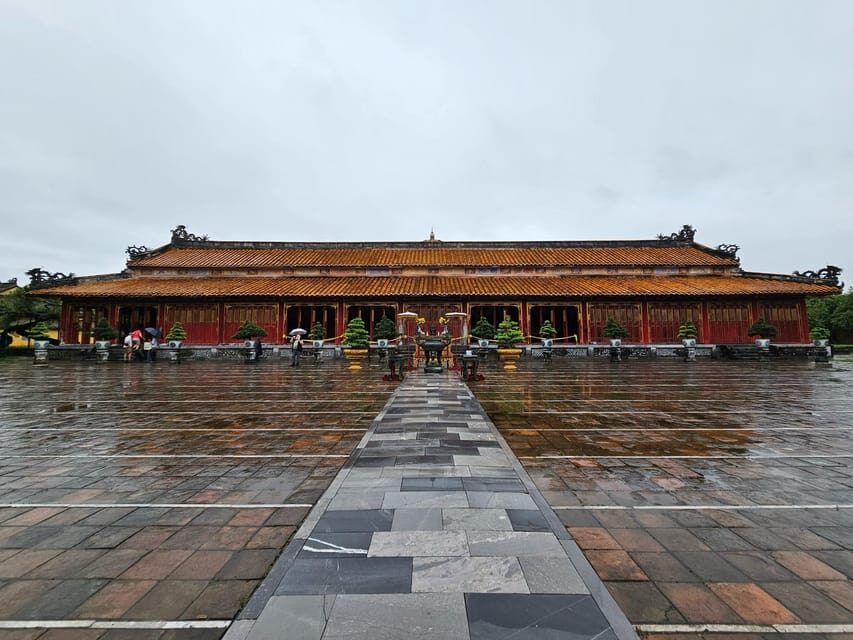
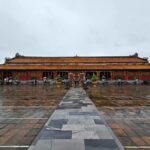
The first palace stop on the core walk is Thái Hòa Palace, also called the Harmony Palace. This is where the Imperial City’s ceremonial logic becomes real, because it’s designed for formal events and symbolic authority.
In practice, this means the guide can explain what you’re looking at in terms of court function: why this kind of space existed, how ceremony reinforced power, and how visitors to the palace would experience rank through the layout. Even if you’re not a “palaces” person, this stop can snap everything into place.
I also like that the tour includes a photo stop and visit time here, so you can actually see details. Thái Hòa isn’t the only stop that matters, but it’s a strong anchor. If you understand this one space, the rest of the complex stops feel less random.
Moving inside: Hien Lam Pavilion, Cửa Chuông Đức, and the gates-between-spaces story
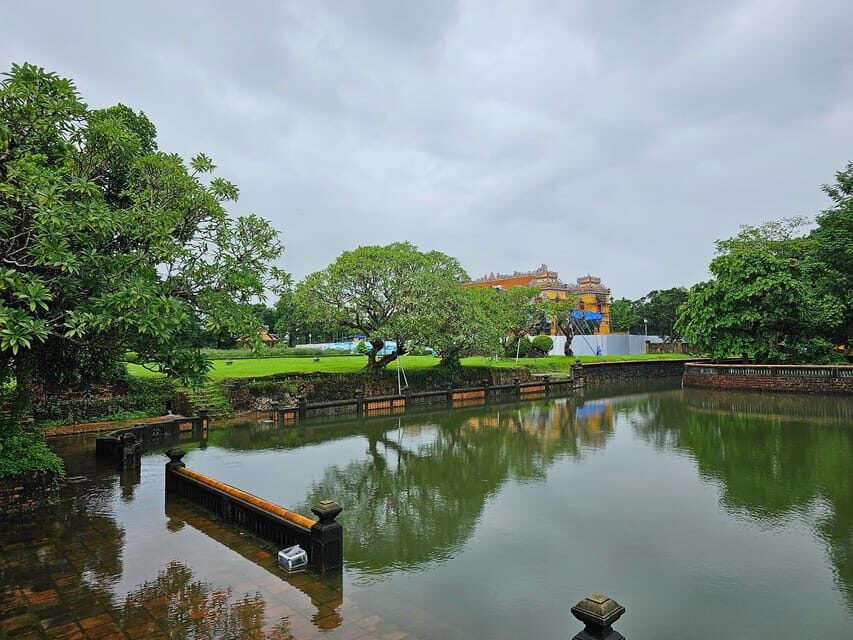
After Thái Hòa, you’ll continue through the Imperial City with shorter but important checkpoints. One is Hien Lam Pavilion, where the guide helps you connect the architecture to everyday court movement and display.
You’ll also see Cửa Chuông Đức, another gateway that helps explain how the Nguyen court separated access. Gates like this weren’t just entrances—they shaped flow, privacy, and who belonged where.
There’s also time built in for breaks. One stretch includes a short break window, which matters because the complex is huge and the walk can stack up quickly. I find that having a planned pause keeps you from turning the day into a hurried march.
If the weather turns gray or rainy, you’ll still likely keep moving. Some past tours were run in rain, and the guide’s pacing helped the day feel controlled instead of chaotic. Still, bring a light rain layer just in case.
The Mieu Temple: where worship rules explain the Nguyen court
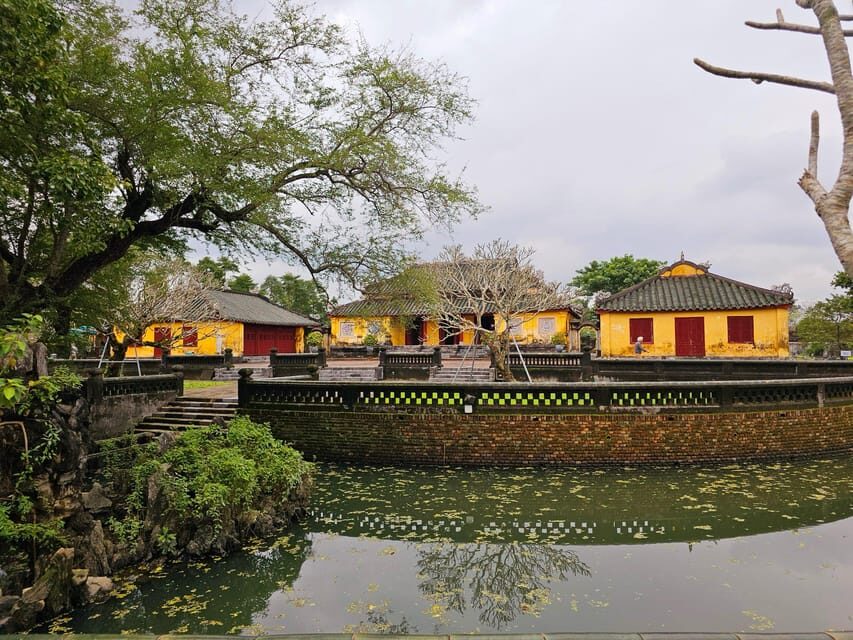
A standout part of this tour is The Mieu Temple. This stop is described as a place used to worship emperors—and it comes with an explanation that does more than name buildings.
Here’s what makes it click: the guide explains why some kings were not allowed to be worshiped in that specific emperor-worship space. That single idea gives you a lens for the whole Imperial City. It turns palaces into governance, not just architecture.
It’s a thoughtful way to understand the Nguyen Dynasty’s system of legitimacy and memory. When you see the temple in the context of who was honored—and who wasn’t—you’ll look at the surrounding arrangement with more meaning. It’s one of those stops where the guide’s storytelling affects how you remember the day.



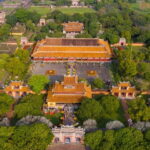

Inside the Forbidden City: Kiến Trung Palace and royal family life
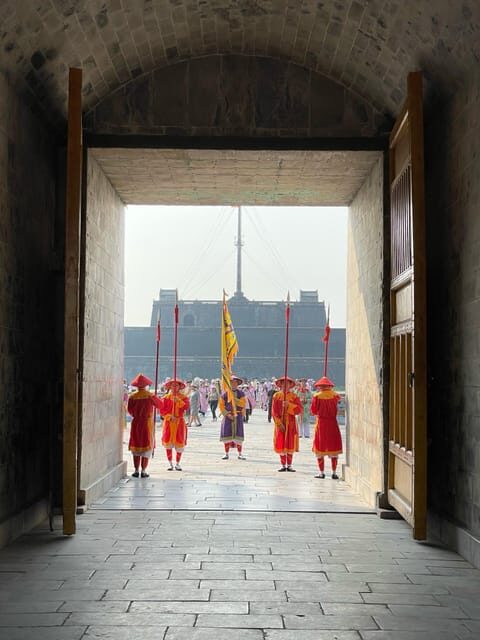
The tour’s Forbidden City portion is where the day shifts from ceremony to the quieter power of residence. The highlight here is Kiến Trung Palace (Kien Trung Palace), described as used as a residence for the king’s family.
That detail matters because it changes your mental picture. You stop thinking of the Forbidden City as only an impressive maze and start treating it as a managed living zone—space for family, private authority, and controlled access. The guide’s explanation helps you understand how “forbidden” worked in practice: not just gates, but layers of control.
You’ll also move through additional pavilions and courtyards in this phase, with photo stops and guided walk time. Those shorter segments can feel quick, but they’re useful if you want a full arc of the Forbidden City rather than one or two showpieces.
After the palaces: Royal Theater, Thiệu Phương Garden, and the Royal Library
One reason this tour feels satisfying is that it doesn’t end when the biggest structures end. It continues into areas that reflect culture and the softer routines of court life.
You’ll visit Thiệu Phương Garden, which gives you a break from walls and halls and lets the guide talk about how gardens supported palace life. You’ll also see the Royal Theater (Duyet Thi Duong Royal Theater), which is a big clue that the court used performance and ritual for culture and display.
Then the tour closes with the Royal Library and Royal Garden. This ending is smart: it gives you a calmer final impression after the intensity of ceremony and residence areas. If you’re the kind of person who likes to wrap a trip with a “what life felt like” stop, this is a good way to finish.
How long the Hue Imperial City walk takes (and how to pace yourself)
The tour duration runs 150 to 330 minutes, depending on the selected timing and how the group moves. That range tells you the real truth: this is not a 45-minute highlight stop. The complex is large, and you’ll spend meaningful time at multiple structures.
What I like about the way this tour operates is the emphasis on steady pacing rather than speed. Many guides are praised for managing time well—good for photos, good for questions, and good for not feeling dragged. If you want to slow down for angles, ask questions, or just sit briefly and take in the air, guides like Ha and Nhien are often noted for adjusting tempo.
Practical tip: wear shoes you’d use for a long museum day. The Imperial City walk is still a walk, and you’ll likely cover a lot of ground even with repeated stops.
Price value: why $11 can be a bargain (and what costs extra)
At about $11 per person, this tour can be excellent value because the main inclusion is the human part. You’re paying for a local guide and a walking route that helps you interpret the site.
But the deal has limits you should plan for. Entry tickets aren’t included, and food and drinks aren’t included. That means your final “all-in” cost depends on how you handle those add-ons at the day itself.
Still, even with tickets and a snack added, the structure can be worth it—because the Imperial City is the kind of place where context can turn confusion into understanding quickly. A guide helps you avoid the biggest self-guided risk: reading the walls as decoration instead of court systems.
If you’re traveling in a way that limits extra spending, you can control costs by bringing water and planning one simple meal before or after. Since the tour includes a short break, a snack plan can keep you comfortable without turning the day into a food hunt.
Who should book this tour (and who might want a different option)
This is a great fit if you want the Nguyen Dynasty story told in place—gate to palace to temple to garden—so you can understand how the Imperial City worked. You’ll get the best experience if you enjoy architecture, ceremonies, and explanations that connect power, rules, and space.
It’s also a good fit for couples, solo travelers, and small groups because private or small-group options are available. Several experiences are praised for feeling personal, even when the tour ends up not being a big crowd. That matters at a site this size.
One caution: it’s not suitable for wheelchair users, so keep that in mind if mobility is limited. Also, if you only want quick photo stops and zero talking, a guided walking tour may feel like more effort than you want.
Should you book this Hue Imperial City & Forbidden City walking tour?
Yes, if you want to leave Hue feeling like you understood what you saw. The Ngo Mon Gate entry, the Thái Hòa Palace framing, the Mieu Temple explanation of worship rules, and the Kiến Trung Palace look at family residence add up to a coherent way to experience the Imperial City.
I’d book it especially if you care about context and you like asking questions. Guides such as Ngọc, Sue, Ha, Hoa, and Nhien are repeatedly praised for explaining clearly and guiding with a good sense of pacing. That combination can turn a huge site from overwhelming into manageable.
Skip it only if you’re very price-sensitive about tickets and food, or if you don’t enjoy guided walking at a pace that’s meant for interpretation.
FAQ
How much does the Hue Imperial City: Citadel & Forbidden City walking tour cost?
The price is listed as $11 per person.
What’s included in the tour price?
The tour includes a local guide and the walking tour.
Are entry tickets included?
No. Entry tickets are not included.
How long does the tour last?
The duration is listed as 150 to 330 minutes, depending on the selected option and starting time availability.
What languages are the guides?
The live tour guide is available in English and French.
Where is the meeting point?
The meeting point is at the 4 Cannons location. The guide will wait there and can send a Google map location via WhatsApp if you share your number.
Is hotel pickup available?
Pickup is optional. The driver and guide can pick you up at your hotel, but you’ll need to provide your WhatsApp number and hotel name.