REVIEW · HUE
3-Hours Hue Imperial Walking Tour with Guide with Lunch/ Dinner
Book on Viator →Operated by Hue Local Tour · Bookable on Viator
That first gate into Hue’s Imperial City feels like a time machine. I like how this walk gives you a practical path through big, easy-to-miss spaces, with photo stops and emperor storytelling that turns stone into people. You’ll also get lunch or dinner built into the timing, so you’re not hunting for food mid-walk. The main thing to watch: not every guide tells the same level of history, so if you want deep scholarship, you’ll want to ask for a more detailed focus.
This is a small-group tour (max 8), which matters in a place this sprawling. And the route is designed to be efficient in about 3 hours, even though the walk can run closer to 4 depending on your pace and questions. One more consideration: the included price doesn’t cover entrance fees, so budget extra for the sites you enter (about $9 per person).
In This Review
- Key Things to Know Before You Go
- What You’re Really Buying for $30 in Hue
- How the 3-4 Hour Walk Works (and Why the Timing Matters)
- The Route, Stop by Stop: What You’ll See and How to Make It Worth Your Time
- Nine Holy Cannons: Bronze Craft Made for Power
- The Noon Gate (Cua Ngo Mon): Ceremonies and Troop Movements
- The Flag Tower: Where the Royal Court Signaled Itself
- Thai Hoa Palace: The Coronation Center of 13 Kings
- Nine Bronze Urns / The Nine Peaks: Minh Mang’s Commission
- The Mieu Temple: Worship for 10 Nguyen Kings
- Hue Royal Palace: Emperor’s Mother, Library, Lake, Garden, Theater
- Hue Historic Citadel: The Forbidden Purple City
- Lunch or Dinner: The Hidden Strength of This Tour
- Group Size, Private Upgrade, and the Guide Factor
- Who This Tour Fits Best (and Who Might Want Something Else)
- Price Check: Is It a Good Deal?
- Should You Book This Hue Imperial Walking Tour?
- FAQ
- How long is the Hue Imperial walking tour?
- Does the price include lunch or dinner?
- Are entrance fees included in the $30 price?
- What’s the group size limit?
- Can I choose a morning tour for fewer crowds?
- Do you offer private tours?
- What do I need to bring or pay for during the tour?
Key Things to Know Before You Go
- Small group (max 8): easier pacing and more time for questions.
- Lunch or dinner included: you’re fed without scrambling in the middle of the day.
- Morning tour option: you can trade some crowds for calmer photos and slower exploring.
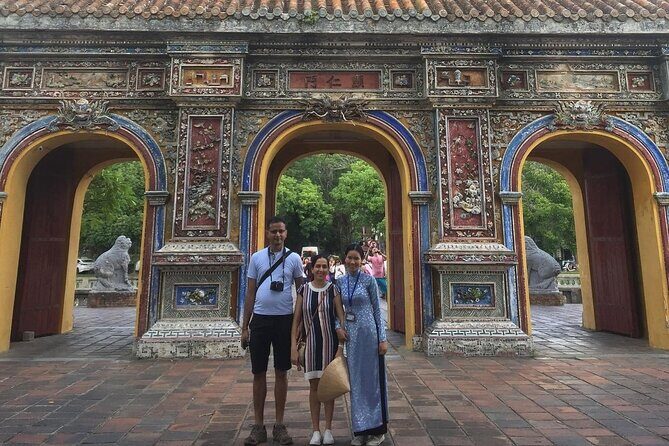
- Imperial City highlights with photo stops: you’ll hit the big named spots without getting lost.
- Entrance fees are extra: the walking tour itself is included, but ticket costs add up.
What You’re Really Buying for $30 in Hue
On paper, this looks like an affordable half-day. In practice, you’re paying for three things: a smart route, an English-speaking guide, and a story thread that links the spaces together.
The price is $30 per person, and the tour includes bottled water plus an English-speaking guide, along with lunch or dinner. Entrance fees are separate at $9 per person, so the real spend is closer to $39 once you add the tickets. For many people, that still feels like good value because Hue’s Imperial City isn’t a quick museum stop—you need time to see what you’re looking at.
The other “value” piece is time. Walking inside Hue Citadel on your own can be confusing fast. With a guide setting the pace, you’re less likely to waste time looping back, guessing which gate matters, or missing the smaller structures that explain how the whole complex worked.
Other walking tours we've reviewed in Hue
How the 3-4 Hour Walk Works (and Why the Timing Matters)

This is listed as 3 to 4 hours. That range is not just filler. You’ll spend short chunks at multiple stops, then you’ll have time at the larger zone to take it in without feeling rushed.
It also helps that you’re not carrying the whole plan. The guide is steering you from key point to key point, with built-in moments for photos. In a complex like this, those photo pauses are useful, not just for pictures. They create natural “reset moments” where you can look back, understand where you are in the overall layout, then keep going.
One more timing tip: if you can choose, a morning tour can mean fewer crowds. That usually translates into less waiting at busy points and more chances to take clean photos.
The Route, Stop by Stop: What You’ll See and How to Make It Worth Your Time
Nine Holy Cannons: Bronze Craft Made for Power
You start with Nine Holy Cannons—nine cannons cast in Gia Long’s second year (1803). These are described as some of the most valuable bronze works of art, and you’ll hear the idea behind why they were made and why they were placed where they were.
Quick advice: stand back for a moment and look at how the cannons relate to the space around them. Even without deep engineering knowledge, you can feel the intent: these are not casual decorations. They signal military strength and state authority, and the guide’s story helps you read them as political statements, not just old metal.
Entrance fees are not included, so plan to pay the ticket at the relevant points.
The Noon Gate (Cua Ngo Mon): Ceremonies and Troop Movements
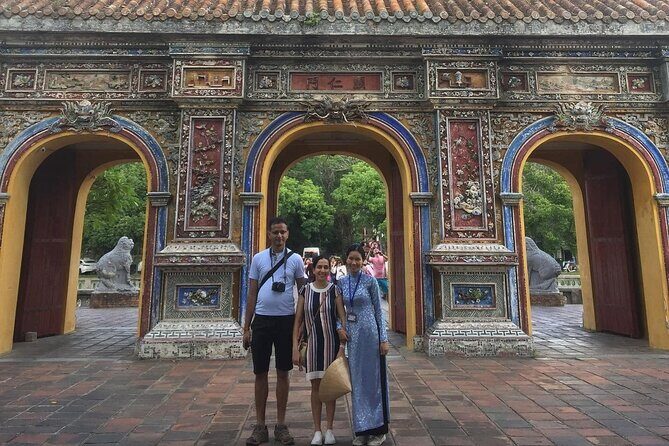
Next comes the Noon Gate (Cua Ngo Mon). Built in 1833 in traditional Vietnamese style under King Minh Mang, it was used by kings for troop movements and ceremonies.
What I like about this stop is that it teaches you how gates functioned in court life. A gate isn’t just an entrance—it’s a boundary with rules. If you ask your guide one good question here—how this gate marked roles or access—you’ll understand the complex faster for the rest of the walk.
Other guided tours in Hue



The Flag Tower: Where the Royal Court Signaled Itself
Then you move to the Flag Tower, an architectural monument tied to the Nguyen Dynasty. It sits on the south face within the Nam Chanh fortress, and it’s specifically described as the place to hang the royal court flag.
This is a smart stop because flags are one of those details that feel simple until you learn what they meant. Your guide should connect the tower to the idea of visibility—how authority had to be seen, not just claimed.
Thai Hoa Palace: The Coronation Center of 13 Kings
At Thai Hoa Palace, you’re at the coronation place of 13 Nguyen kings, from Gia Long to Bao Dai. It was seen as the center of the country in feudal regimes, and the scale of the space helps you grasp why coronations needed to happen here.
One practical move: take a moment to mentally map what you’re seeing to the idea of succession. Coronation isn’t only ceremony—it’s a statement of continuity. A good guide will make the space feel like the stage for that message, not just a pretty stop.
Also, since this is a walking tour built for efficiency, your time at each palace is short—about 10 minutes here—so use that time to ask one follow-up question rather than trying to read everything yourself.
Nine Bronze Urns / The Nine Peaks: Minh Mang’s Commission
You’ll also see nine bronze urns in front of The Mieu Temple. These were commissioned by Emperor Minh Mang in winter 1835 and inaugurated on March 1, 1837. They’re referenced as part of The Nine Peaks description.
This section can be a highlight if the guide explains what you’re looking for. Even without a long explanation, the date information is a gift: it anchors the objects in time and helps you understand that these weren’t “ancient” in the vague way—someone ordered them, someone built them, and there was a specific moment they became part of the official setting.
The Mieu Temple: Worship for 10 Nguyen Kings
Next is The Mieu Temple (also called The To Mieu), built in 1821. It’s described as a temple to worship 10 Nguyen Kings.
This stop is where the tour can shift from pure architecture to belief. If your guide links the temple to the dynasty’s idea of legitimacy—who is honored, and why—you’ll leave with a better sense of what “imperial” meant day to day.
You get around 20 minutes here, which is a good chunk for taking photos and listening. If you’re the type who likes to ask questions, this is an easy place to do it.
Hue Royal Palace: Emperor’s Mother, Library, Lake, Garden, Theater
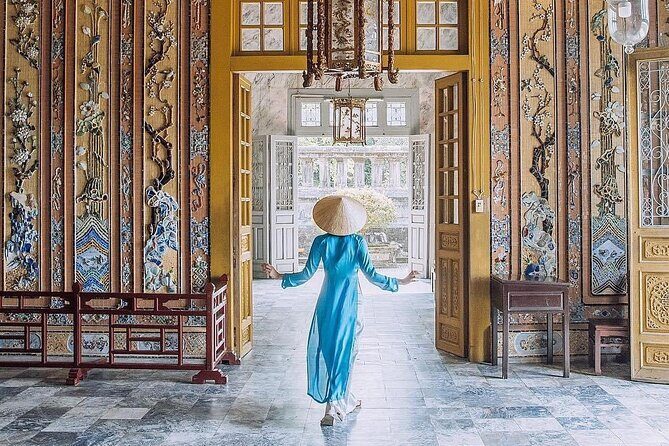
Then you’ll walk through parts of the Hue Royal Palace. The description includes the residence of the emperor’s mother, the Royal Library, the Royal Lake, the Royal Garden, and even the Royal Theater.
I like that this stop includes everyday-sounding elements like gardens and a lake. It helps break the common mental picture that a palace is only about power displays. The palace here is shown as an ecosystem—work, culture, leisure, and administration all living in the same walled world.
Time at this part is about 20 minutes, so don’t try to absorb every label. Instead, decide what you’re most interested in—library life, theater/culture, or the emotional logic of who lived where—and listen for that thread.
Hue Historic Citadel: The Forbidden Purple City
Finally, you reach Hue Historic Citadel, described as the area that includes the Forbidden Purple City. The description explains it as part of the ancient capital complex, where daily life of kings, queens, minor wives, and concubines of Nguyen emperors took place.
This is the big finish, with around 50 minutes allotted. It’s also where the tour’s pacing becomes very noticeable. If your guide is strong at storytelling, this stop can feel like the whole complex clicks into place. If your guide is lighter on detail, you might still enjoy the setting but leave wanting more context.
So here’s my practical advice: treat the Forbidden Purple City as your “question stop.” If anything felt confusing earlier—gates, symbolism, who lived where—this is where you can ask for the connections.
Lunch or Dinner: The Hidden Strength of This Tour
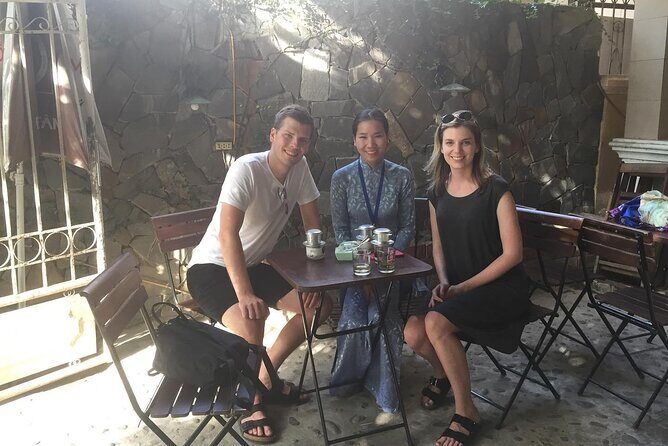
I appreciate tours that don’t treat food as an afterthought. Here, lunch or dinner is included, which means you can focus on the sights without turning the day into a logistical scavenger hunt.
The tour is built as a half-day, so the meal helps you keep energy steady for walking and listening. If your stomach hates delays, this is a real quality-of-life upgrade.
One caution: because entrance fees are extra, you might feel like you’re “spending twice” at points. Mentally separate the costs: entrance tickets are your site access, while lunch/dinner is part of the tour plan.
Group Size, Private Upgrade, and the Guide Factor

The group size cap is 8 travelers. That’s a sweet spot for Hue’s Imperial City. Large groups tend to make palace stops feel like a slow parade. Small groups make it easier to pause, ask questions, and move at a speed that fits your attention.
There’s also an upgrade for a private tour. If you’re the kind of traveler who wants more history and fewer general explanations, a private format is your best lever. It’s also useful if you care about photo pacing—so you can take fewer, better shots instead of squeezing everything into quick stops.
The guide quality seems to be the biggest differentiator. Some guides have been praised for knowing emperor stories and pacing the walk well. Others have been criticized for not telling enough history. That doesn’t mean the tour is bad—it means your experience can tilt depending on who you get.
So my best move is simple: when you book, set your expectation. If you want deep, structured imperial history, say so. Ask your guide to focus on who the emperors were, how the ceremonies worked, and why these spaces were designed the way they were.
Who This Tour Fits Best (and Who Might Want Something Else)

This tour fits you if you want:
- a clean overview of the Imperial City main sights in about half a day
- an easy path through the complex without getting lost
- emperor-focused stories and photo stops
- a tour that includes bottled water and a meal
You might prefer a different option if you:
- want a heavily academic, lecture-style history lesson
- need very slow, detailed museum time (this walk is built for coverage and pace)
- have strong language requirements beyond English (the tour is positioned around English, and mismatches can happen if you’re not explicit)
Price Check: Is It a Good Deal?
For $30, you get a guided walk with stops at major points plus a meal. The addition of $9 entrance fees brings the typical total higher, but entrance tickets are common for sites like this.
To me, the key question is: will you benefit from a guide to connect the places? If you’re curious and you like asking questions, the guide time is what turns “seeing buildings” into “understanding why they matter.” In that case, the price feels fair.
If you plan to mostly wander on your own, this could feel like paying for a route you could replicate. But if your goal is a smart, efficient overview with stories, you’re paying for convenience and context.
Should You Book This Hue Imperial Walking Tour?
Yes, if you want a well-paced introduction to Hue’s Imperial City in one afternoon, plus an included meal and a small-group guide. It’s especially worth it if you like the emperor-and-empire angle and you want help navigating a complex space efficiently.
I’d book with more confidence if you:
- choose a morning slot for calmer walking
- plan to ask questions at the bigger sites like the Forbidden Purple City area
- consider the private upgrade if history depth is your top priority
If you’re mainly after self-guided wandering with minimal talking, you may get less value. But if you want structure, photo-friendly stops, and stories that connect the gates, palaces, towers, and temples, this is a solid way to spend a half-day in Hue.
FAQ
How long is the Hue Imperial walking tour?
It runs about 3 to 4 hours.
Does the price include lunch or dinner?
Yes. Lunch or dinner is included in the tour.
Are entrance fees included in the $30 price?
No. Entrance fee is listed as $9.00 per person and is not included.
What’s the group size limit?
This tour has a maximum of 8 travelers.
Can I choose a morning tour for fewer crowds?
Yes. A morning tour option is mentioned as a way to see the palace with fewer crowds.
Do you offer private tours?
There is an option to upgrade to a private tour for a more personalized experience.
What do I need to bring or pay for during the tour?
You should budget for entrance fees (listed as $9.00 per person). You’ll also need to cover personal expenses not included in the tour price.
You Might Also Enjoy

More Walking Tours in Hue

More Tours in Hue
- Easy Rider private tour via Hai Van pass from Hue – Da Nang – Hoi An (1Way|Loop)
★ 5.0 · 1,542 reviews


More Tour Reviews in Hue
- Easy Rider private tour via Hai Van pass from Hue – Da Nang – Hoi An (1Way|Loop)
★ 5.0 · 1,542 reviews