REVIEW · HUE
Hue Walking Tour: Explore The Imperial City & Tour Guide
Book on Viator →Operated by Huế Tours and Transfers · Bookable on Viator
Imperial gates, cannon views, and palace power. This Hue Imperial City walking tour strings together major spots from the Nguyen Dynasty story, with a guide who helps you get oriented fast and keeps the route logical. You start near Cửu Vị Thần Công (Nine Holy Cannons) and work your way through the most photo-worthy, historically important buildings inside the citadel walls.
I especially like two things here. First, the tour is built around stops like the Ngọ Môn (Noon Gate) and Điện Thái Hòa (Supreme Harmony Palace) where you can actually picture how rule and ceremony worked. Second, the guide handles practical stuff at the start, including help with Imperial City tickets, plus bottled water to keep you going.
One thing to factor in: the tour price covers the guide, but the Imperial City entrance ticket (200,000 VND per person) isn’t included. So budget a little extra, and wear comfy shoes because this is a true walking-style route over a large complex.
In This Review
- Key highlights you’ll actually feel on the walk
- Why this Hue Imperial City walking tour makes sense
- Getting going: where you meet and how pickup helps
- Price and logistics: what you’re really paying for
- Stop-by-stop: what you’ll see in the Imperial City
- Nine Holy Cannons (Cửu Vị Thần Công)
- The Flag Tower (Kỳ Đài Huế)
- Ngọ Môn (Noon Gate) and Ngu Phụng Pavilion (Lầu Ngũ Phụng)
- Điện Thái Hòa (Supreme Harmony Palace)
- Duyệt Thị Đường Royal Theater
- Kien Trung Palace (Kiến Trung Palace)
- Điện Diên Thọ (Dien Tho Palace)
- Vườn Thiệu Phương (Thieu Phuong Garden)
- Nine Dynastic Urns (Cửu Đỉnh)
- Hien Lâm Pavilion and the details that make it memorable
- Thế Miếu (Mieu Temple)
- The guide experience: why names like Austin, Ha, and Duyen matter
- What the 2–2.5 hour format gets right
- Who should book this tour
- Practical tips that make the walk easier
- Should you book this Hue Imperial City walking tour?
- FAQ
- How long is the Hue Walking Tour: Explore The Imperial City?
- How much does it cost, and what’s included?
- Do I need to buy the Imperial City entrance ticket?
- Where do we meet for the tour?
- Is pickup available?
- Is this a private tour?
- Is free cancellation available?
Key highlights you’ll actually feel on the walk
- Ticket help at the start so you don’t lose time figuring things out
- Imperial City route in about 2.5 hours, flexible for morning or afternoon
- Royal architecture stops like Điện Thái Hòa and the ironwood Ngu Phụng Pavilion
- Very specific history markers, including the Nine Dynastic Urns and Minh Mạng-era bronze work
- A garden and memorial moments so it’s not all stone and gates
- English-speaking guide plus bottled water, a small thing that makes the tour smoother
Why this Hue Imperial City walking tour makes sense
Hue’s Imperial City can feel like a lot when you’re wandering on your own. Gates look similar. Courtyards blur together. And without context, you miss the point of why these buildings matter.
This tour solves that with a simple plan: you walk a curated loop, and your guide explains what each place was for. You’re not just looking at walls and rooftops—you’re connecting them to Nguyen Dynasty power, ceremony, and daily life.
It also runs at a comfortable 2–2.5 hours, which is a sweet spot. Long enough to cover the highlights, short enough that you can still enjoy the rest of Hue the same day.
Other Imperial City and Citadel tours in Hue
Getting going: where you meet and how pickup helps

The guide meets you at Cửu Vị Thần Công in Cửa Ngân (Nine Holy Cannons area). That’s a smart starting choice because it’s one of the most distinctive landmarks in the imperial complex, and it sets the tone for the whole visit.
The experience lists pickup offered, and the schedule runs either morning or afternoon. So if you’re building a full day in Hue, you can slot this in without it swallowing your entire morning or late afternoon.
Price and logistics: what you’re really paying for
The tour is $22 per person for an English-speaking guide, bottled water, and the on-site support to get you moving. It’s also described as private, meaning you’re with your group only (not packed in with strangers).
But you also need the Imperial City entrance ticket: 200,000 VND per person. Since several stops are marked as not included, you’ll want to think of the $22 as the guide + structure, and the ticket as the park access fee.
For value, the key question is time. At $22, you’re buying a route and a clear story, not just company. If you’re the type who likes walking but hates staring at buildings without context, this price can be a good deal.
Stop-by-stop: what you’ll see in the Imperial City
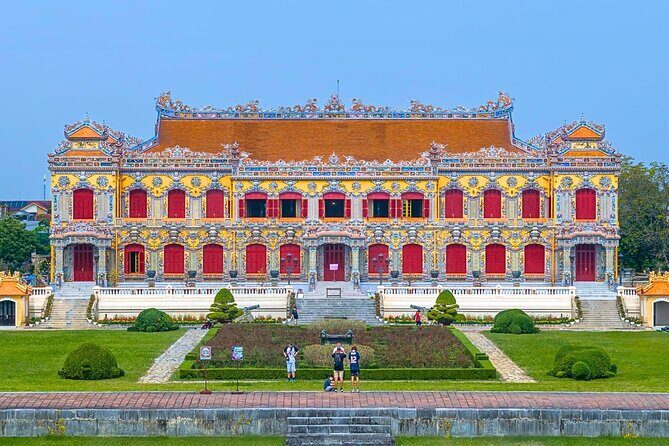
The tour moves through a sequence of major imperial landmarks. You’ll spend about 10–15 minutes per stop, which keeps momentum without turning the visit into a race.
Nine Holy Cannons (Cửu Vị Thần Công)
You start at the Nine Holy Cannons area, where your guide assists with ticket acquisition and then gets the walk underway. This is a strong opener because it’s directly tied to the place’s defensive and royal purpose.
Even if you only catch part of the explanation, you’ll likely notice how the cannon story fits into the wider idea of control inside the citadel.
Other walking tours we've reviewed in Hue





The Flag Tower (Kỳ Đài Huế)
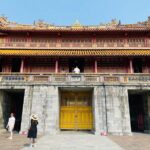
Next is the Flag Tower, built in 1807 at about 30 meters, damaged by artillery, and later rebuilt in 1948 at about 37 meters. That timeline gives you a real sense of how history hit this site more than once.
When you look up at a structure like this, the guide’s framing helps you see it as more than a viewpoint. It’s a symbol and a timeline.
Ngọ Môn (Noon Gate) and Ngu Phụng Pavilion (Lầu Ngũ Phụng)
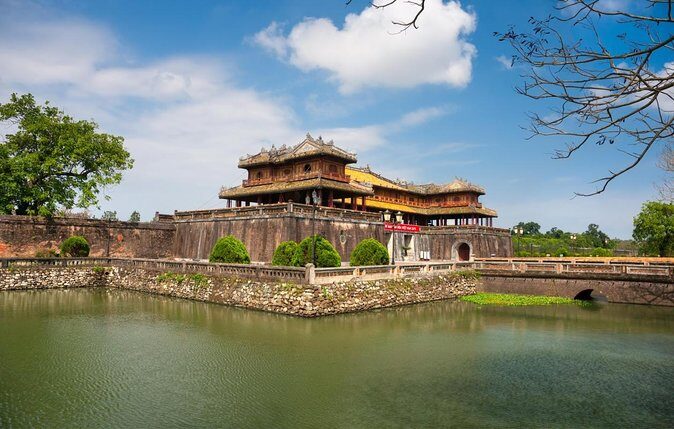
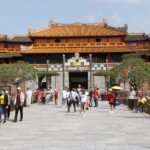
The tour then focuses on Ngọ Môn Hue, the Noon Gate, built in 1833 and described as the entrance only for the king. Above it is the Ngu Phụng Pavilion (Lầu Ngũ Phụng), with a frame structure made entirely of ironwood and 100 pillars.
This is one of those places where architecture details actually help. The ironwood + pillar count turns a “pretty gate” into a measurable story—something you can remember later when you’re back in your photos.
Điện Thái Hòa (Supreme Harmony Palace)
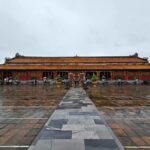
At Thai Hòa Palace, you get the tour’s strongest “power in one building” moment. It’s described as the most important palace in Hue Imperial, with the throne located there, a symbol of Nguyen Dynasty authority.
If you like royal symbolism, this stop is the payoff. If you just want scenic variety, it’s still worth it because the guide explains what you’re looking at and why it mattered.
Duyệt Thị Đường Royal Theater
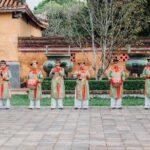
The route continues to Duyệt Thị Đường Royal Theater, an ancient theater inside the Hue Imperial complex. It’s noted for royal architecture, and the listing says performances with royal acts still take place.
This stop is a good change of pace. You’re not only seeing governance buildings; you’re seeing court culture—how entertainment and ceremony belonged inside the same walls.
Kien Trung Palace (Kiến Trung Palace)
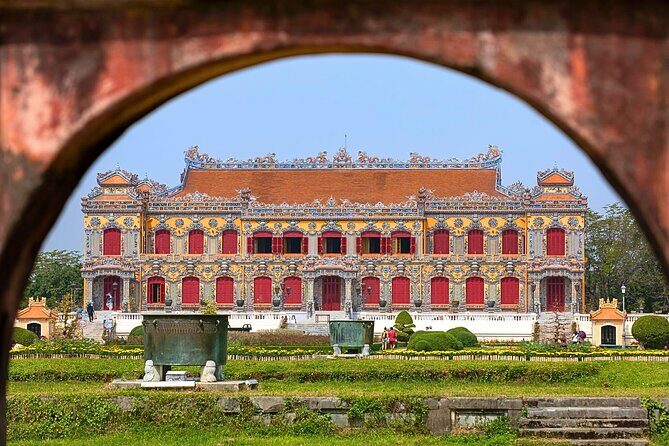
At Kiến Trung Palace, you’ll hear a more modern-and-sad arc. It was built in 1923 with a mix of Asian and European architecture, then completely collapsed in 1947. It’s been rebuilt in 2019 and is said to not be completed until 2024.
If you’re the type who likes to connect history to what you can see today, this is a meaningful stop. You’re viewing a living reconstruction, not just old ruins.
Điện Diên Thọ (Dien Tho Palace)
Next is Điện Diên Thọ (Dien Tho Palace), described as a private place for the king’s mother, built in 1804. The listing also notes that it remained intact during the war, which gives it a rare “survivor building” feeling.
When you see a place framed this way, you start thinking differently about palace life. It’s not only about public power. It’s also about family and private authority.
Vườn Thiệu Phương (Thieu Phuong Garden)
After palaces and gates, the tour adds a breather: Thieu Phương Garden. It’s about 8,000 square meters, surrounded by gardens and brick walls.
This stop helps break up the visual heaviness. Even if you’re not a garden person, it gives you a sense of how the imperial complex wasn’t only stone. It had controlled calm.
Nine Dynastic Urns (Cửu Đỉnh)
Then comes the Nine Dynastic Urns, unique bronze works from the reign of King Minh Mạng. The urns include images of Vietnam as it was at the time, with a total of 162 images.
This is a stop where the guide’s explanation matters a lot. Without context, you might just see bronze. With context, you’re looking at a historical record translated into art.
Hien Lâm Pavilion and the details that make it memorable
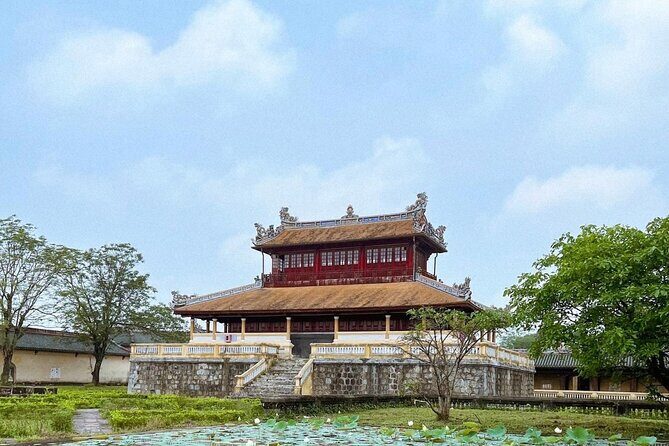
The route includes Hien Lâm Pavilion (listed twice with different levels of detail). The first description says it was built in 1821–1822 and is a three-story royal-architecture pavilion, considered a memorial remembering the merits of the Nguyen kings.
The second part of the description adds what you can look for: a three-story wooden structure on a brick-tiled block, with two stone staircases leading to the pavilion. Each staircase has 9 steps, and the stair holders are decorated with dragon patterns.
This is where you’ll appreciate that the tour isn’t just names and dates. It’s also the small architectural rules that repeat—like the 9-step symmetry—that can actually stick in your memory.
Thế Miếu (Mieu Temple)
Next is Thế Miếu Huế (often called The Mieu), described as a general shrine to the kings of the Nguyen Dynasty. It sits in the southwest corner of the Imperial Citadel.
Shrines can be easy to overlook because they don’t always look like the biggest palaces. But the fact that it’s a dedicated shrine space makes it a key piece of the overall story of rule, worship, and legacy.
The guide experience: why names like Austin, Ha, and Duyen matter

Your guide isn’t a background detail here. The experience is repeatedly described in terms of how well the guide made history make sense and how fun the explanation felt.
I like that the tour can include guides such as Austin, Ha, Duyen, and Sue (names pulled from guide credits in past experiences). The shared theme is clear: when your guide connects the architecture to how the court worked, the complex stops feeling random.
The best part is the pacing. You’re not stuck listening the whole time. You get short explanations, then you walk to the next meaningful stop.
What the 2–2.5 hour format gets right
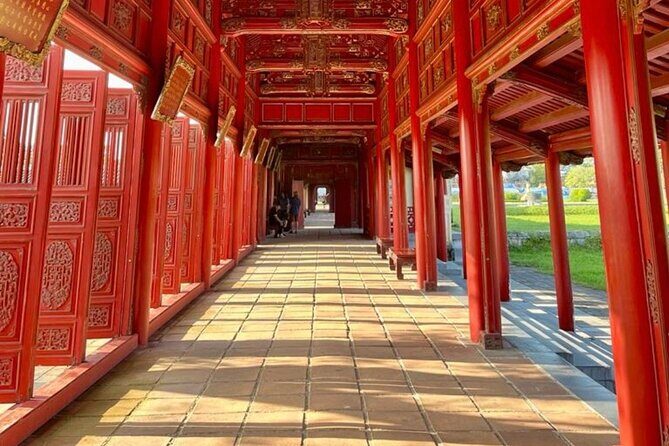
Hue Imperial City is large, so timing matters. A shorter visit can leave you with a photo and a vague sense of where you went. A longer visit can turn into fatigue.
This tour lands in the middle. With the typical 10–15 minutes per stop timing, you get enough context at each building, then you move before boredom kicks in. It’s also built to be flexible for morning or afternoon sessions.
If you plan to do other Hue sights the same day, this duration helps you keep control of your schedule.
Who should book this tour
This fits you best if:
- you want structure in the Imperial City without feeling rushed
- you prefer a human explanation over reading signs at random
- you’re interested in Nguyen Dynasty symbols and “what each building was for”
- you like guided history with enough time to still look around on your own
It might be less ideal if:
- you hate walking or need lots of long sitting time
- you plan to spend hours in only one zone and want zero schedule pressure
Practical tips that make the walk easier

You’ll be moving through an outdoor complex with changes in light and long viewing angles.
- Wear comfortable walking shoes. Even with short stop times, the Imperial City is big.
- Use the bottled water early. The tour includes bottled water, so you don’t have to buy right away.
- Bring a camera strap or phone lanyard. You’ll be stopping at gates, towers, and detailed pavilion structures where steady hands help.
- If you have strong weather that day, plan your camera breaks between key stops like Ngọ Môn and the Nine Dynastic Urns.
Should you book this Hue Imperial City walking tour?
Yes, if you want a focused way to understand Hue’s imperial layout in a short time. The combination of an English-speaking guide, ticket assistance, and a stop list built around the most meaningful symbols (Noon Gate, Supreme Harmony Palace, cannons, urns, and the shrine) makes it a strong “first look” tour.
Skip it or consider another format if you’re only interested in one or two buildings and would rather do everything at your own pace. In that case, you might prefer to wander independently after getting the ticket.
If you’re visiting with limited time and want the Imperial City to feel like a story instead of scattered monuments, this is a smart choice for your Hue day.
FAQ
How long is the Hue Walking Tour: Explore The Imperial City?
The tour runs about 2 hours 30 minutes (approximately).
How much does it cost, and what’s included?
It costs $22.00 per person. Included are an English-speaking guide and bottled water.
Do I need to buy the Imperial City entrance ticket?
Yes. The Imperial City entrance ticket is 200,000 VND per person and is not included. The guide helps with ticket acquisition at the start.
Where do we meet for the tour?
The guide meets you at Cửu Vị Thần Công in Cửa Ngân (Nine Holy Cannons area).
Is pickup available?
Yes. The tour lists pickup offered.
Is this a private tour?
Yes. It’s described as private, meaning only your group participates.
Is free cancellation available?
Yes. You can cancel up to 24 hours in advance for a full refund.
You Might Also Enjoy



More Tours in Hue
- Easy Rider private tour via Hai Van pass from Hue – Da Nang – Hoi An (1Way|Loop)
★ 5.0 · 1,542 reviews



More Tour Reviews in Hue
- Easy Rider private tour via Hai Van pass from Hue – Da Nang – Hoi An (1Way|Loop)
★ 5.0 · 1,542 reviews