REVIEW · HUE VIETNAM
Hue Royal Tombs Tour: Visit Best Pagodas & Mausoleums
Book on GetYourGuide →Operated by Adventure Journey Vietnam · Bookable on GetYourGuide
Hue can feel spread out, so smart routing matters. This private tour lets you shape your day around royal tombs and Hue pagodas, with an English-speaking guide and a driver who keeps things moving. I especially like the option to customize your route and the way the stops connect politics, family life, and Buddhism in one day. One thing to plan for: tomb entry tickets are not included, so your total cost depends on how many sites you choose.
Quick cars, quiet history, and great photo light. Minh Mang and Tu Duc show you how emperors built not just tombs, but whole worlds for wives, concubines, and even eunuchs. Khai Dinh brings a rare mixed-style look, and Thien Mu + Từ Hiếu explain why religion still shapes daily life here. The possible drawback is simple: if you pack in too many sites, you’ll be walking a lot on uneven grounds and sun, so pace it to your comfort.
In This Review
- Key reasons this Hue Royal Tombs Tour is worth your time
- Why Hue tombs are a lot more fun with a private car
- How to choose your best tomb and pagoda mix (without overloading your day)
- Minh Mang’s Tomb: where an emperor built a household city
- What to watch out for at Minh Mang
- Tu Duc’s Tomb: a ruler’s retreat and work space
- Best way to experience Tu Duc
- Khai Dinh’s Tomb: mixed styles and a more modern mood
- Potential downside at Khai Dinh
- Gia Long and Dong Khanh: the founder’s complex and a rural tomb setting
- Thien Mu Pagoda: Buddhism you can feel in the skyline
- Good reasons to choose Thien Mu
- Watch your pace
- Từ Hiếu Pagoda: mindfulness in a place linked to Thích Nhất Hạnh
- A practical approach to Từ Hiếu
- Price and tickets: what $15 really means in your total day
- My advice for budgeting
- The guides: why names matter on a tomb day
- Who should book this Hue Royal Tombs Tour (and who should adjust)
- Should you book this Hue Royal Tombs Tour?
- FAQ
- How long is the Hue Royal Tombs Tour?
- Where does the tour pick you up and drop you off?
- What’s included in the price?
- Are entry tickets included?
- Can I customize which sites I visit?
- What royal tombs and pagodas are covered?
- Is the tour private or shared?
- What language is the tour guide?
- Is the tour wheelchair accessible?
- FAQ
- How much notice do I need to cancel for a full refund?
- Can I reserve now and pay later?
Key reasons this Hue Royal Tombs Tour is worth your time
- Customizable route: pick the tombs and pagodas you care about most, within a 2–8 hour window
- Royal life, not just stone: you’ll hear how emperors’ households worked, including wives, concubines, and eunuchs
- Multiple architectural styles: Minh Mang, Tu Duc, Khai Dinh, and the others show different design priorities
- Buddhism in context: Thien Mu and Từ Hiếu help you understand why spiritual sites matter to locals
- Private car efficiency: drives between stops are short (often 30–45 minutes; Gia Long runs longer)
Why Hue tombs are a lot more fun with a private car
Hue tombs are not one neat loop you can knock out fast on foot. They’re scattered, and the road time adds up. With a private car/van, you get the practical luxury that matters in Vietnam: less wasted time, fewer stress moments, and more hours for walking where the story is.
The tour also starts with easy pickup options in Hue’s city center (or at Hue Train Station). That’s a big deal because tomb days work best when you’re not scrambling to meet transport. You can also choose the length of your experience, with a stated range of 2 to 8 hours, so you can match it to your energy level and your other plans.
Another plus is the private group setup. Even if you’re traveling with friends, you can move at your pace at each stop instead of getting herded or rushed. That freedom is especially useful at the mausoleums, where you may want extra minutes just to read, look closely, or take photos without feeling behind.
If you're still narrowing it down, here are other tours in Hue Vietnam we've reviewed.


How to choose your best tomb and pagoda mix (without overloading your day)

The core value here is that you’re not locked into one rigid route. You can tailor the day to “best sightseeing places in Hue city,” mixing royal mausoleums with key Buddhist sites. In practice, that means you can build a story arc that makes sense to you.
A common smart strategy is to pick:
- 1–3 royal tombs if you want deeper walking time and photos
- Plus one pagoda if you want the spiritual side of Hue
- If you’re tight on time, skip one mausoleum and focus on the one with the architecture style you’re most curious about
You’ll also get a guided visit at each stop (with free time for photos and wandering). Expect breaks and photo stops, plus short scenic drives between sites. The drive times you should keep in mind are fairly modest: around 30–45 minutes between many stops, and about 1 hour for the longer run to the Gia Long area.
And yes: food isn’t included, so plan for water and a snack. That sounds obvious, but tomb days can turn into “I forgot to eat” days quickly—especially in the midday heat.
Minh Mang’s Tomb: where an emperor built a household city
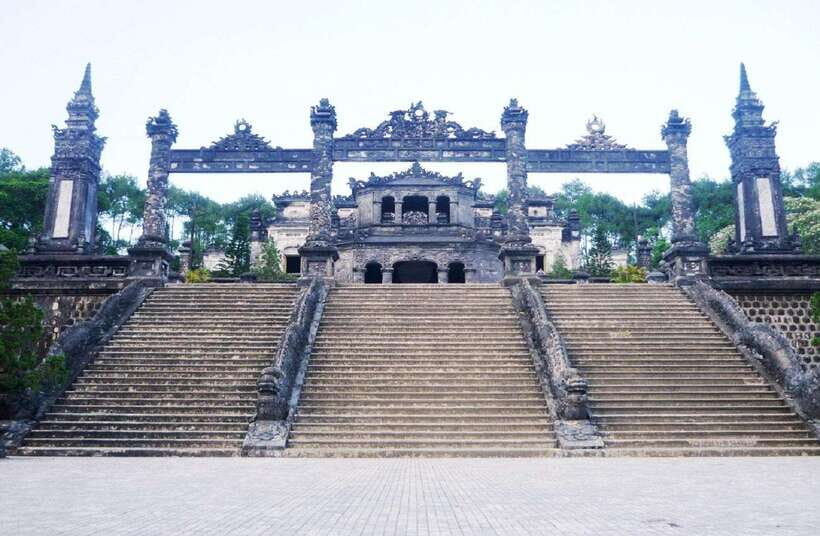
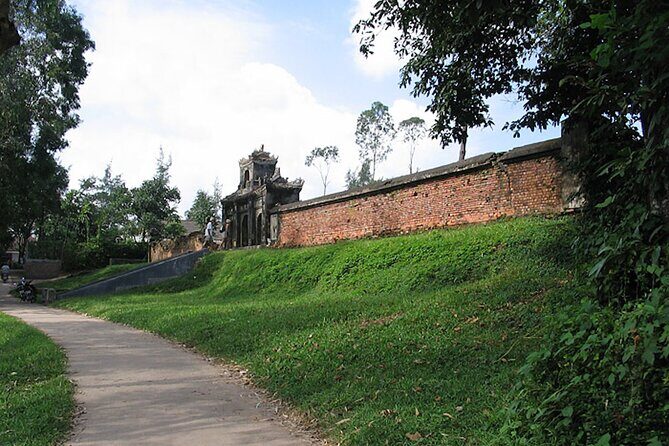
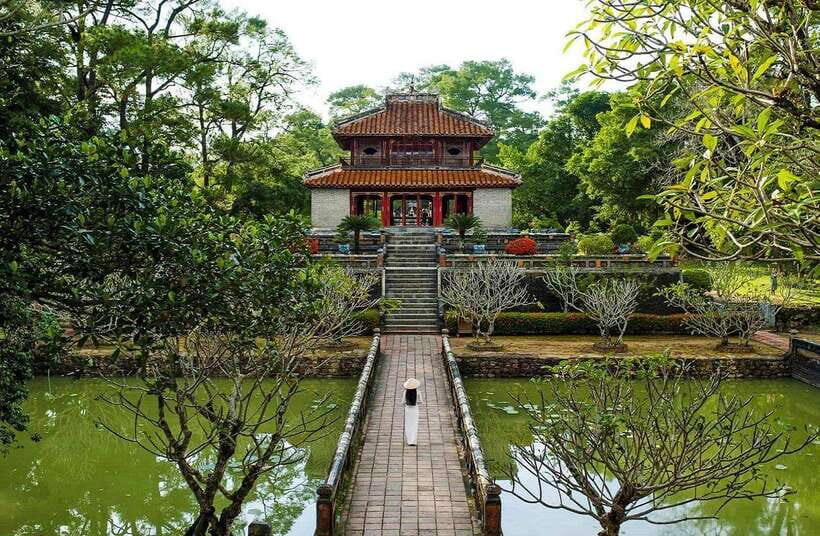
Minh Mang’s Tomb is one of the big names, built from 1840 to 1843. The construction started under Emperor Minh Mang, then continued after he died, with finishing work done by his son, King Thieu Tri.
What I like about Minh Mang’s Tomb is that it doesn’t feel like a single-grave monument. The site covers about 15 hectares and includes 26 buildings for different functions. That scale changes how you look at the place. It feels less like a museum object and more like a designed living system.
This tomb also matters because it connects directly to the personal structure of royal life. The complex served as living quarters for minor wives and concubines—specifically noted as people without children for him—plus eunuchs after Minh Mang died in 1840. That household detail is not decorative. It helps you understand why so much “architecture” here is really about control, routine, and hierarchy.
What to watch out for at Minh Mang
With a complex this spread out, it’s easy to walk more than you planned. Wear comfortable shoes and plan for some steady strolling. If you’re not a big walker, focus on the key areas with your guide first, then use the free time to circle back for photos.
Tu Duc’s Tomb: a ruler’s retreat and work space

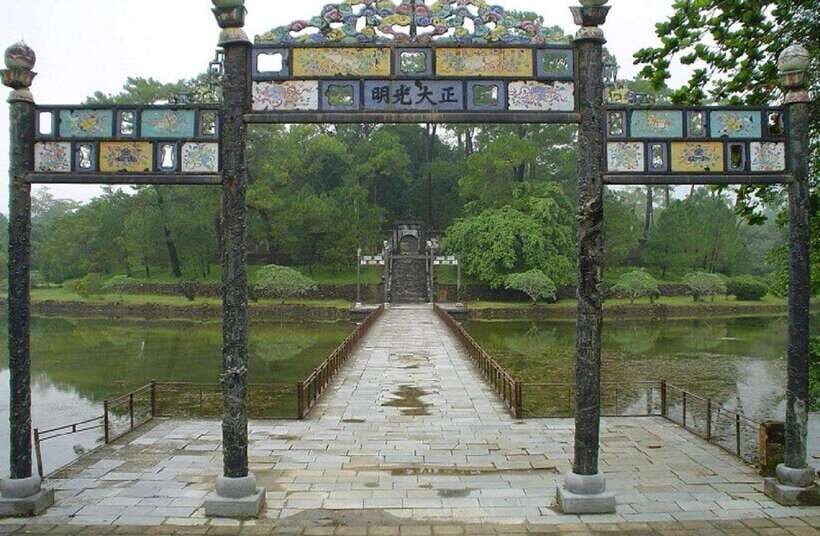
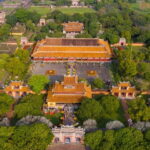
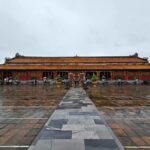
Tu Duc’s Tomb was built by King Tu Duc for himself from 1864 to 1867. Here’s why it sticks in your mind: it wasn’t only a future burial plan. The tomb was also a place where Tu Duc sometimes lived and worked while he was still alive.
The site spans about 12 hectares and is divided into two separated areas: a temple area and a burial area. That split gives you an easy way to read the overall design—one zone for ongoing spiritual and ceremonial focus, the other for the final resting function.
The household angle is here too. After Tu Duc’s death in 1883, the tomb also became living quarters for minor wives, concubines, and eunuchs. Again, you’re seeing how the Nguyen royal system extended beyond the emperor’s daily power into long-term arrangements.



Best way to experience Tu Duc
If you enjoy quieter, reflective sites, Tu Duc is often the one you’ll slow down for. Take advantage of the guided explanations early, then use free time to roam at your own pace. The separation between temple and burial areas also gives you natural “pause points” to regroup, reorient, and take photos without rushing.
Khai Dinh’s Tomb: mixed styles and a more modern mood
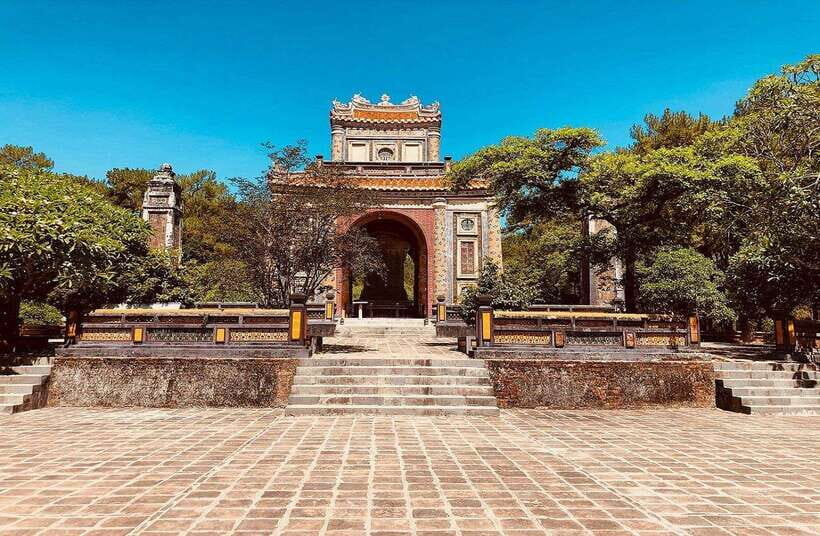
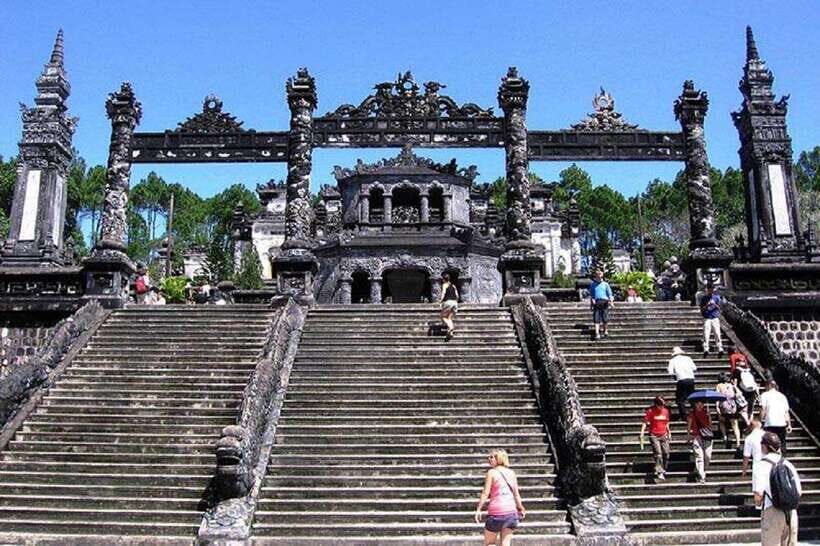
Khai Dinh Tomb (built 1920–1931) is the style curveball. Construction began under Khai Dinh from 1920 to 1925, then continued under his child from 1925 to 1931 after his death.
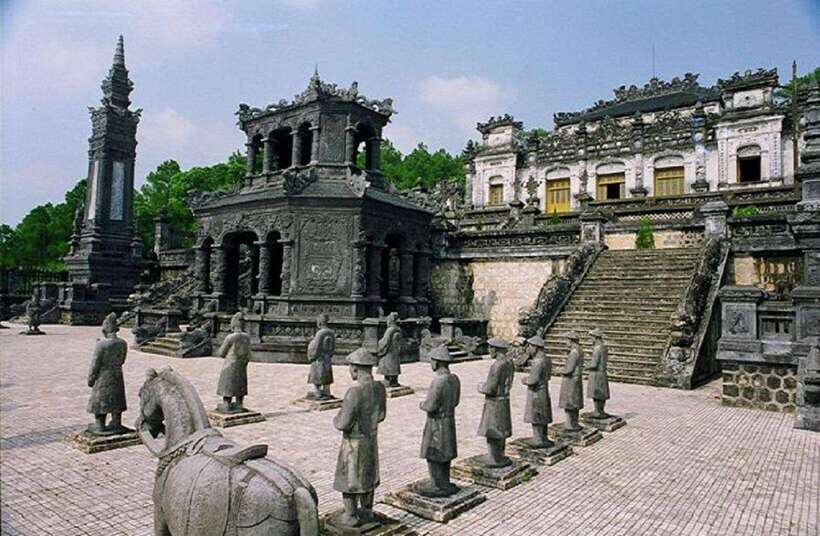
The most distinctive part: Khai Dinh’s tomb is described as the one Nguyen kings built with blended styles of Orient and European. That doesn’t just mean you’ll see a random mix of decorative ideas. It changes how the whole monument feels. You’ll likely notice it in proportions, surfaces, and the overall visual attitude of the structures.
The scale is huge in a different way—about 48.5m x 117m—so it’s the kind of site where you’ll want a few moments from different angles. Your guide can help you connect what you’re seeing to the story behind it.
Potential downside at Khai Dinh
Because it’s large and visually complex, it can feel like a lot if you’re already tired from the earlier tombs. If you have limited time, choose to spend extra energy here and trim earlier stops.
Gia Long and Dong Khanh: the founder’s complex and a rural tomb setting
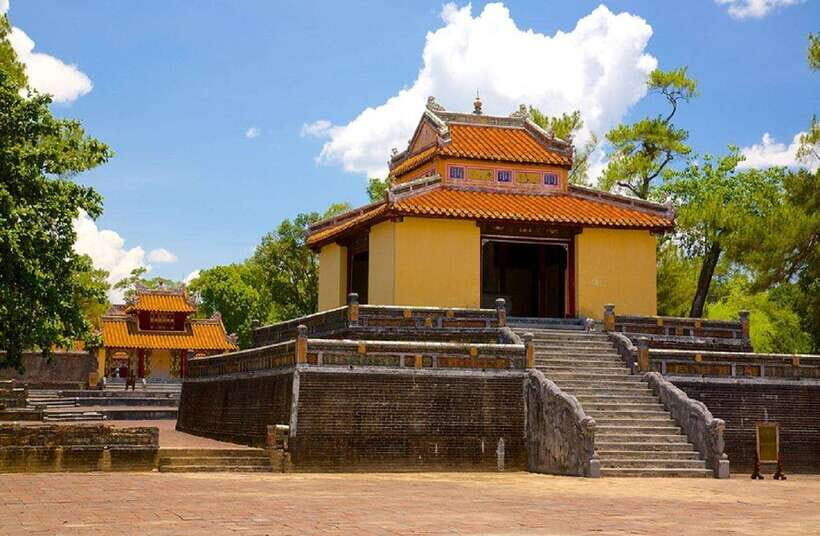
Gia Long Mausoleum is tied to the founder of the Nguyen Dynasty. Construction began in 1814 and was completed in 1820, honoring Emperor Gia Long (1762–1820). This site is described as a complex of many royal mausoleums, located in Long Ho Ward, Phu Xuan District, Hue City.
The practical part: it’s also the longer ride in the typical set, with the drive time listed as about 1 hour. That means it can be a smart “anchor stop” if you’re planning a longer day, or a later stop if you want the morning to focus on the closer tombs first.
Dong Khanh Tomb (also called Tu Lang) is different in mood and setting. It’s located in a rural area near Thuong Hai village in Thuy Xuan ward. Architecturally, it’s described as having about 20 large and small works with relatively high density, and it’s divided into two areas: palace area and tomb area.
I like Dong Khanh for one reason: it feels less like a single tourist hotspot and more like a composed burial complex embedded in its surroundings. If you enjoy stepping slightly away from the most obvious tourist circuits, this is a strong choice.
Thien Mu Pagoda: Buddhism you can feel in the skyline
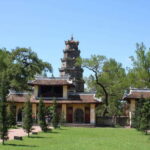
Thien Mu Pagoda is a major Hue spiritual landmark. It was built in 1601 by the founder of the Nguyen family in central Vietnam, and it’s also tied to local lore: it was built because of a dream of local people.
The tour’s pagoda stop isn’t just a quick photo. It’s there to explain the importance of Buddhism to locals. That context matters. Without it, you see buildings and statues but miss why people still treat these places as living spiritual centers.
Good reasons to choose Thien Mu
- It’s a famous religious spot in Hue, so it helps you understand the city at a glance
- Your guide can connect what you see to the spiritual tradition locals maintain
Watch your pace
Pagodas often involve some walking and stairs. Pair Thien Mu with good shoes and plan to slow down. It’s not a race.
Từ Hiếu Pagoda: mindfulness in a place linked to Thích Nhất Hạnh
Từ Hiếu Pagoda is also called the Root Temple. It’s one of Hue’s greatest temples, with strong cultural and historical value.
Here’s a detail you won’t forget: the tour notes that Zen Master Thích Nhất Hạnh is living there after returning to Vietnam from the US. Even if you don’t personally meet anyone, that connection changes how you look at the place. It’s not only old architecture. It’s tied to a continuing spiritual story that reaches beyond Vietnam.
The tour description also frames Từ Hiếu as a more active experience: hiking is listed, and there can be options like scooter ride, bike tour, or even a listed helicopter flight. In real-world terms, you can expect more movement here than at a flat tomb courtyard—so decide what level of activity you want in your day.
A practical approach to Từ Hiếu
If you’re trying to keep things simple, pick the walking and guided time you want, then skip the optional extra rides. The goal is to see the temple thoughtfully, not to turn it into an adrenaline schedule.
Price and tickets: what $15 really means in your total day
The stated price is $15 per person, with a private car/van and pickup/drop-off in Hue city center included. That’s the baseline value: transportation plus the ability to shape the day.
But you also need to factor in tickets. The tour explicitly says tomb entry is not included: 150k per tomb per person. That can change your math fast if you add multiple mausoleums.
There’s also a combo-ticket note that’s very useful if you’re planning ahead. If you’re combining Imperial City and Tombs, you can buy:
- 420k per person for Imperial City with 2 Tombs
- 530k per person for Imperial City with 3 Tombs
These combos are valid in two days.
So the value equation becomes personal:
- If you’re doing multiple royal tombs anyway, the combo can save money
- If you’re only aiming for a couple of mausoleums plus pagodas, individual tomb tickets might be the simpler option
My advice for budgeting
Before you book, decide how many tombs you truly want to see. Then price the tomb tickets and compare with the combo if you’re also interested in Imperial City. It’s not just about cost. It’s about how much time you’ll have to see each site without feeling rushed.
The guides: why names matter on a tomb day
The success of a royal tomb tour often comes down to the guide. You’ll be close to details like family structures, timeline changes, and architectural choices, and those are hard to connect without help.
From the guide names and experiences you might run into, the service has a track record of friendly, hands-on guidance. You may be with people like Bi, Duy, Tra My, or David. One driver—David—is highlighted as attentive, with the practical note that tombs are far apart, so booking a guided route makes a big difference.
One guide named Bi is specifically praised for telling curiosities during the drive, not just facts once you arrive. That’s a great travel style for Vietnam day trips: you get context while the scenery rolls by, so when you reach a tomb or pagoda, you already know what to look for.
You might also get help with local logistics beyond the monuments, such as advice on other transfer options, money exchange tips, and even suggestions for places to try—like a local coffee spot mentioned as salty coffee. That kind of extra care can turn a good day into a smooth one.
Who should book this Hue Royal Tombs Tour (and who should adjust)
This tour fits best if you:
- Want a private day with pickup and a driver who handles the spacing between sites
- Care about royal history beyond the main headline names
- Prefer having an English guide interpret what you’re seeing at each stop
- Want to combine tombs with Buddhist pagodas so Hue makes more sense
It may not be the best fit if:
- You dislike walking and stairs, because mausoleums and temple grounds can require steady movement
- You only want the absolute easiest, quickest “hit list” stops—because the value is in pacing and context
- You haven’t budgeted for tomb tickets, since that cost is a key part of the day’s total
The good news: you control the mix. Use that flexibility.
Should you book this Hue Royal Tombs Tour?
I’d book it if you’re in Hue with a half-day to full-day window and you want your time to feel guided, not frantic. The private car reduces road stress. The customization lets you hit the sites you actually care about. And the focus on royal life—wives, concubines, and eunuchs—plus Buddhism at Thien Mu and Từ Hiếu gives you a fuller picture of what Hue is.
Do it with one caution: price it honestly. The tour fee is only part of the budget because tomb tickets add up per site. If you plan your number of tombs (and consider combo tickets with Imperial City if relevant), you’ll get a day that feels worth every dong and minute.
FAQ
How long is the Hue Royal Tombs Tour?
The duration is listed as 2 to 8 hours, depending on your chosen stops and timing.
Where does the tour pick you up and drop you off?
Pickup and drop-off are available in Hue city center hotels, and pickup is also available at Hue Train Station. You can specify your exact hotel name and address for convenience.
What’s included in the price?
You get pickup and drop-off in the city center and private transportation by car/van. A tour guide is available for the option that includes a guide (English).
Are entry tickets included?
No. Tomb entry tickets are not included and are listed as 150k per tomb per person.
Can I customize which sites I visit?
Yes. You can customize your personal itinerary to visit the best sightseeing places in Hue, including multiple royal tombs and pagodas.
What royal tombs and pagodas are covered?
The tour information lists Minh Mang Tomb, Tu Duc Tomb, Khai Dinh Tomb, Gia Long Tomb, Dong Khanh Tomb, Thien Mu Pagoda, and Từ Hiếu Pagoda.
Is the tour private or shared?
It’s a private group.
What language is the tour guide?
The tour guide language is English.
Is the tour wheelchair accessible?
Wheelchair accessibility is indicated.
FAQ
How much notice do I need to cancel for a full refund?
Free cancellation is offered up to 24 hours in advance for a full refund.
Can I reserve now and pay later?
Yes. The tour offers reserve now & pay later, with no payment needed today.