REVIEW · HUE VIETNAM
Hue: Hue Walking Tour to Imperial Citadel with Tour Guide
Book on GetYourGuide →Operated by Huế Tours and Transfers Company · Bookable on GetYourGuide
The Nguyen dynasty hits you fast in Hue. This guided walking tour helps you connect the big architecture to the people behind it, from 13 Nguyen kings to the rules of court life, with stories that can even touch the secrets behind the harem. I love the English-speaking guide level of detail, and I also like the private-group feel you can keep asking questions in, like guides such as Austin, Tâm, Hà, and Nhi Tran are known for. One small consideration: the entrance ticket is not included, so factor that cost into your total.
You can choose a morning or afternoon slot, and the walk runs about 2 to 2.5 hours at a comfortable pace with short stops for photos and explanation. You meet at Cuu Than Cong in Cua Ngan (where your guide holds a welcome sign and helps with ticket purchases), then head into the Imperial Citadel area with bottled water included.
In This Review
- Key highlights you’ll actually feel on the walk
- Why Hue Imperial City makes more sense with a guide
- Meeting at Cuu Than Cong and how the tour keeps moving
- Ngo Mon Gate and the Flag Tower: where ceremony and authority begin
- Thai Hoa Palace: the coronation site that turns “history” into a scene
- Imperial Citadel space, Duyet Thi Duong theater, and the role of display
- Gardens and pavilions: how the court’s quieter spaces tell a story
- Kien Trung Palace: the European-style shock inside a Vietnamese world
- Dien Tho Palace and court access rules: where the secrets behind the harem make sense
- Nine Dynastic Urns and The Mieu: symbolic order at street level
- A practical look at price, tickets, and what $15 gets you
- Who should book this Hue Imperial City walking tour
- Quick self-check before you book
- Should you book this Hue Imperial City tour?
- FAQ
- How long is the Hue Imperial City walking tour?
- Where do I meet the guide?
- Is the guide English-speaking?
- Are entrance tickets included in the price?
- What’s included in the tour price?
- Is hotel pickup available?
- Do I choose between morning and afternoon?
- Is there a private group option?
- What is the cancellation policy?
Key highlights you’ll actually feel on the walk
- English explanations tied to real power and ceremony, not just names on signs
- Short, efficient visits to the major set pieces, timed well for a 2–2.5 hour experience
- Stories of coronations and court rules, including how access to the Forbidden Purple City worked
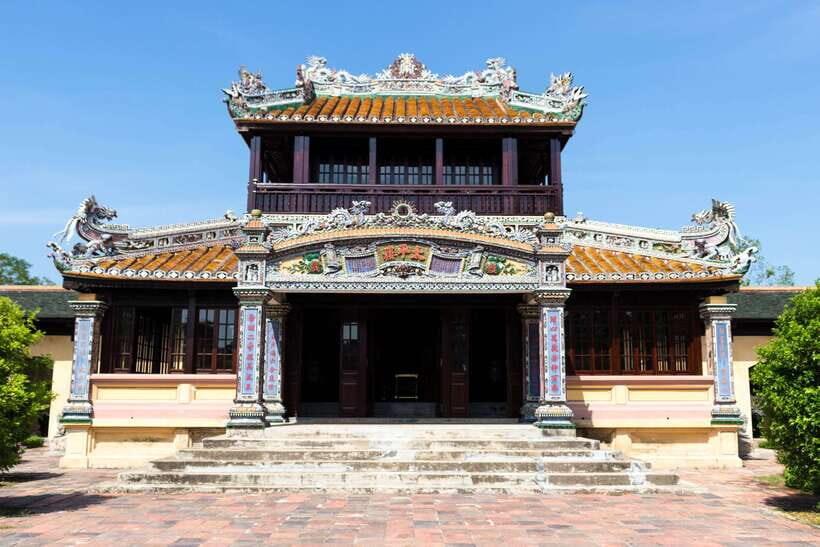
- Architecture you can see with your own eyes, from Minh Mang’s gatework to Khai Dinh’s European-style palace
- A harem-court angle, where daily life and hierarchy become easier to picture
Why Hue Imperial City makes more sense with a guide

Hue’s Imperial City is huge on purpose. The whole design is meant to separate who could go where, and who belonged inside which layer of power. Without context, it’s easy to admire the buildings and still miss the point.
That’s where a guide helps. You get an English narrative that links major spaces to the Nguyen Dynasty’s rulers, and you also hear how ceremony shaped daily life. The tour focuses on the core “where power happened” places, from the main gate to the halls where kings were crowned, so you walk away with more than photos.
The best part for me is that the stories aren’t abstract. They’re tied to specific locations you can stand in front of, including how the Forbidden Purple City restricted access to the king and royal family.
If you're still narrowing it down, here are other tours in Hue Vietnam we've reviewed.

Meeting at Cuu Than Cong and how the tour keeps moving

You start at Cuu Than Cong in Cua Ngan—the guide is easy to spot with a welcome sign and your name. If you opted for hotel pickup, a driver meets you at the hotel reception lobby and takes you to the start point, then you regroup with the guide.
Plan to arrive a little early. The guide helps with ticket purchases before you head into the Imperial Citadel area, and it keeps the whole experience smooth instead of turning into a scramble. Bottled water is included, which matters here because walking inside the complex can add up fast, even when each stop is short.
Slots run in the morning or afternoon, and the total experience is about 150 minutes. In practice, that timing is a sweet spot: long enough to understand the major political and architectural story, short enough that you don’t feel dragged between points.
Ngo Mon Gate and the Flag Tower: where ceremony and authority begin
Your walk gets going with the royal-court visual basics: the gate and the signals of rule.
First up is the Flag Tower (Ky Dai Hue). This tower in Nam Chanh fortress was used to hang the royal flag for court activities. Even if you’re not a flag-nerd, this stop sets a theme: the Nguyen court communicated power through visible, formal markers.
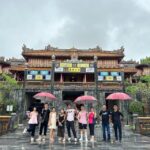
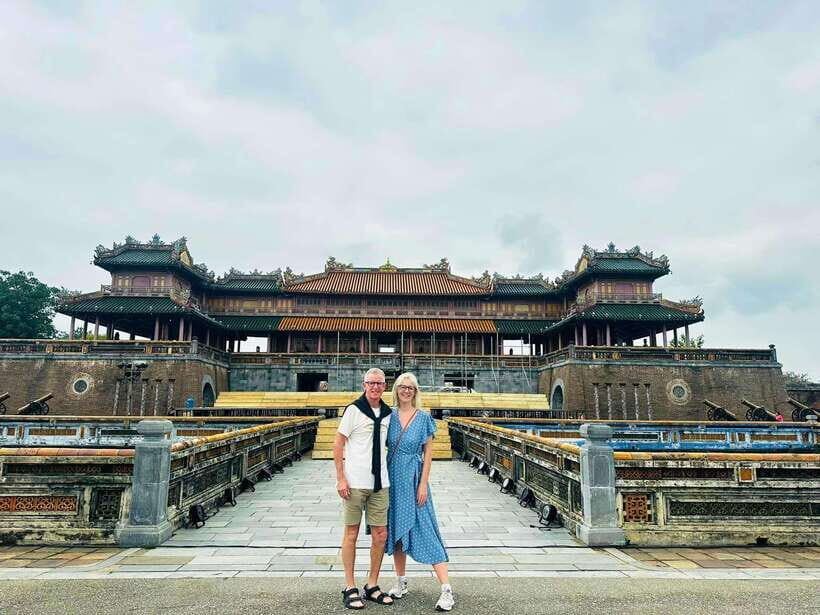
Next is Cua Ngo Mon (the Ngo Mon area), tied to the grand “main gate” feeling. You’ll hear that Ngo Mon Hue was built in 1833 under King Minh Mang, and that it served as a ceremony platform during important Nguyen Dynasty events. Standing near a place like this helps you understand why the citadel isn’t just a museum layout—it was designed for public moments of authority.
If you care about photos, these early stops are strong because they’re dramatic and symmetrical. The only real drawback is also the simplest: arrive ready to look up. These structures reward a glance upward as much as a straight-on shot.
Thai Hoa Palace: the coronation site that turns “history” into a scene
From the gate and ceremony space, the tour shifts into the most important idea in the Imperial City: rule passed through formal ritual.
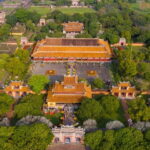
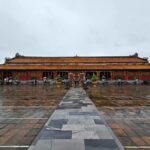
You’ll visit Thai Hoa Palace, described as a coronation place for the kings of the Nguyen Dynasty—specifically tied to the coronations of the dynasty’s 13 kings. It’s one thing to read about dynastic legitimacy. It’s another to stand in the area where that legitimacy was staged.
A good guide makes this clearer. You’ll hear how feudal power worked: not just who ruled, but how the system justified rule through ritual and architecture. Thai Hoa Palace is the place where you start feeling that logic.
This is also a stop where you can ask questions and get direct answers. If you’re the type who wants the “why did they do it that way” part, you’ll use your time here well.
Imperial Citadel space, Duyet Thi Duong theater, and the role of display

After the palace focus, the tour continues through the Hue Historic Citadel area, giving you a sense of the overall layout and the big defensive framework that helped keep the court separate from the outside world.
Then comes a curveball that I love: the Duyet Thị Đường Royal Theater. The tour frames it as one of the four theaters built during the Nguyen Dynasty, and the oldest preserved theater from that era. This stop matters because it reminds you that courts weren’t only about governing and worship. They also used performance and ceremony to reinforce hierarchy and shared culture.
If you’re wondering what to pay attention to, watch how the theater fits into the larger citadel story. You’re not just seeing a building; you’re seeing how the court used entertainment and spectacle as part of authority.
One practical note: theater and palace interiors can feel different depending on restoration and lighting. Even if your main goal is photography, keep an eye out for the best angles rather than rushing for one perfect shot.




Gardens and pavilions: how the court’s quieter spaces tell a story
Next you’ll move into lighter, slower stops that help the whole tour make emotional sense.
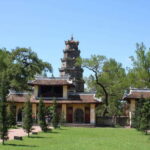
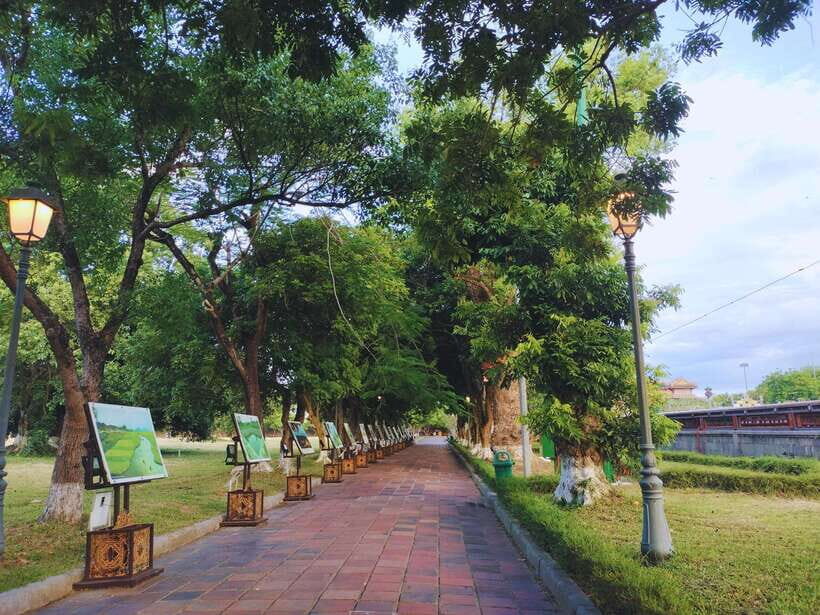
You’ll visit Thiệu Phương Garden, then continue to spots like the Thai Bình Pavilion and Hien Lâm Pavilion. The data doesn’t give a single “one purpose” explanation for each pavilion, but that’s exactly why these are useful. Pavilions and gardens are where court life got gentler and more controlled—spaces built for views, meetings, and measured downtime.
These stops also give your legs a break. With a total walk around the citadel of about 2 to 2.5 hours, the pacing matters. The tour uses short guided visits and photo pauses, so you’re not stuck in one place long enough to feel bored, but you still get meaning.
If you tend to skim, these garden and pavilion stops are where you should slow down for a minute. Look at how the built spaces frame sightlines. That layout is part of the “how the court lived” story.
Kien Trung Palace: the European-style shock inside a Vietnamese world
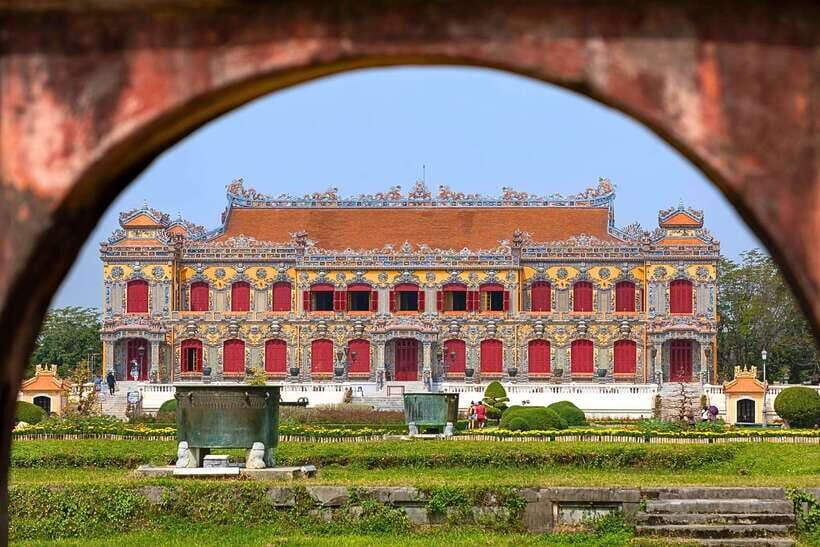
One of the most interesting contrasts on the route is Kiến Trung Palace (Điện Kiến Trung). You’ll learn it was built in 1923 by Emperor Khải Định, and that it’s different from the traditional buildings around it.
Here’s the key detail: it was designed in a European style, mixing elements of Italian Renaissance and French classicism. That combination can feel surprising at first. But as you walk through Hue’s imperial spaces, it stops feeling random. You start seeing how late Nguyen rule negotiated new influences while still using the legitimacy of palace tradition.
This is also a great place to ask the guide to compare styles. The tour’s structure makes it easy to connect the architectural differences to changing eras and priorities.
Dien Tho Palace and court access rules: where the secrets behind the harem make sense
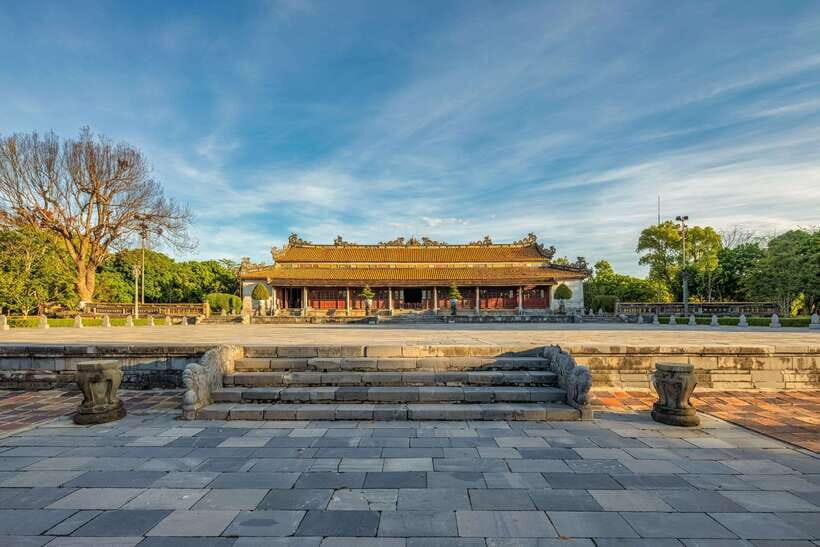
Now you arrive at one of the most human-story spaces on the route: Cung Diên Thọ (Dien Tho Palace).
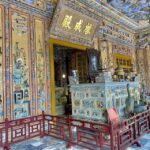
The tour highlights it as a large-scale project with intricately carved details in an elegant style, particularly well-preserved in the main hall. It’s also described as serving as the Queen Mother’s residence. In other words, this isn’t only a king’s power stop. It’s a reminder that power in imperial Vietnam also moved through influential family roles.
This part of the tour is where “court life” becomes clearer. You’ll hear stories about court systems, including the secrets behind the harem, and you’ll also connect that to how access was controlled. The Forbidden Purple City was reserved exclusively for the king and royal family, with restricted access for non-duty officials and civilians. Even if you don’t spend time in every restricted zone, the guide’s explanation helps you understand why the citadel has those layered boundaries.
For me, that’s the biggest payoff of the tour: the rules stop being abstract. When you understand the access system, the palace layout reads like a map of power, not just a collection of buildings.
Nine Dynastic Urns and The Mieu: symbolic order at street level
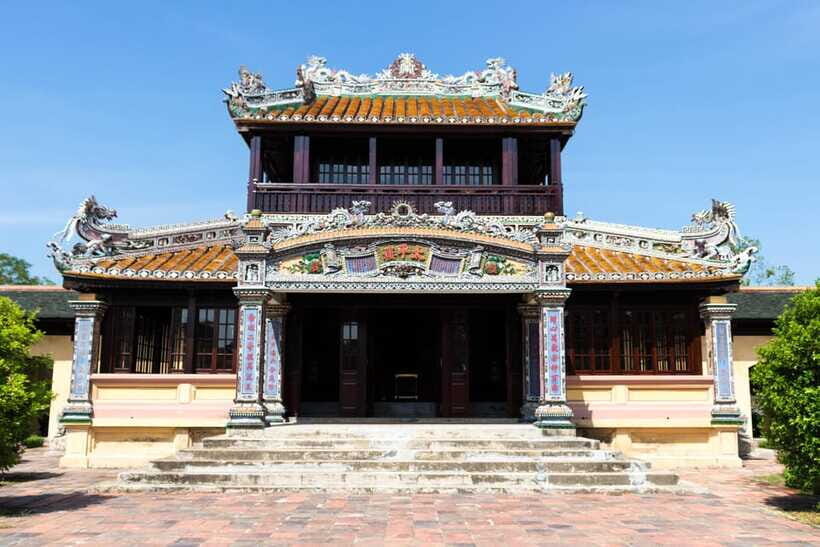
As the walk moves toward the urns and nearby temple spaces, the story shifts from grand ceremony to symbolic order.
You’ll visit the Nine Dynastic Urns (Cửu Đỉnh Huế), commissioned by Emperor Minh Mang in 1835. They adorn the front of The Mieu. The tour also explains that The Mieu Temple is dedicated to worshiping 10 Nguyen kings.
This stop is easy to underestimate if you’re only thinking about “palaces and thrones.” But the urns and temple connection show another side of rule: legacy and ritual continuity. It’s not only about what happened during a reign. It’s about how the dynasty framed respect for earlier rulers.
If you like detail, ask your guide what each element meant in the system. The tour’s format—walking stop by stop—makes these meaning-based questions work well.
A practical look at price, tickets, and what $15 gets you
At $15 per person for about 150 minutes, the value is strongest if you want context fast. You’re paying for an English-speaking guide, plus bottled water and local insurance are included.
What’s not included is important: the entrance ticket and tips. That doesn’t make the tour bad value. It just means you should budget the total. If you were planning to enter the Imperial City anyway, adding a guide is a straightforward upgrade because you’ll understand what you’re paying to see.
Also consider the format. This is a walking tour with timed stops, so if you want to linger in one specific building for a long time, a private group option can help you control the pace.
Who should book this Hue Imperial City walking tour
I’d point you toward this tour if you:
- want the big names and the real meaning behind them, including the 13 kings and the court system
- enjoy architecture but don’t want to guess the story behind it
- prefer walking with guidance instead of relying only on an audio guide
- like asking questions as you go, since guides such as Austin, Anna, Ryan, Tâm, Hà, and Duyên are noted for being attentive and clear
It’s also a good pick if you’re short on time in Hue. The tour is long enough to connect the dots, but not so long that you feel wiped out.
Quick self-check before you book
If you like facts, structure, and the human story behind power, you’ll probably love this. If you only want scenic photos and don’t care much about what the buildings meant, you could find it less satisfying.
Also think about tickets. The guide will help you with ticket purchases, but your budget should still include the admission cost.
Should you book this Hue Imperial City tour?
Yes—if your goal is understanding. This is one of those walks where a guide turns scattered sights into a clear story: main gates, coronation space, court boundaries, and the architectural contrasts that reflect changing eras. At $15 for roughly 2 to 2.5 hours, with English guidance and water included, it’s a solid way to make your time in Hue feel organized and worth it.
If you book, do one simple thing: come with at least one curiosity question in mind, like how access worked inside the Forbidden Purple City or why Khải Định’s palace looks so different. Then you’ll get more than a tour. You’ll get a way to read the place.
FAQ
How long is the Hue Imperial City walking tour?
The tour runs about 150 minutes, with guided walking and stops lasting roughly 2 to 2.5 hours depending on the slot.
Where do I meet the guide?
You meet at Cuu Than Cong in Cua Ngan (Nine Holy Cannons). The guide holds a welcome sign with your name.
Is the guide English-speaking?
Yes, the tour includes a live English-speaking guide.
Are entrance tickets included in the price?
No. Entrance tickets are not included, and the guide assists with ticket purchases before you start.
What’s included in the tour price?
The tour includes an English-speaking guide, bottled water, and local insurance.
Is hotel pickup available?
Pickup is optional. A driver can pick you up and drop you off at your hotel reception lobby.
Do I choose between morning and afternoon?
Yes. You can choose either a morning or an afternoon slot for the program.
Is there a private group option?
Yes, a private group option is available.
What is the cancellation policy?
You can cancel up to 24 hours in advance for a full refund.