REVIEW · HUE VIETNAM
Hue: City Sightseeing Hop-On Hop-Off Bus Tour
Book on GetYourGuide →Operated by City Sightseeing Worldwide · Bookable on GetYourGuide
Hue can feel big. This hop-on hop-off loop turns it into a plan you can actually use, with 9-language audio guiding you through Hue’s top sights.
I like the fact that you can shape your day. With 1-day or 2-day flexibility, you hop off where you want, explore at your pace, and get back on when you’re ready. It’s a smart way to see the “musts” without locking yourself into a strict group schedule.
One caution: the bus ride itself is 90 minutes, and buses run about every 40 minutes, so you’ll want to time ticketed attractions carefully. On busy or rainy days, that timing matters more than you’d think.
In This Review
- Key things to know before you ride
- A $19 ticket that buys you options, not just transportation
- How the 1–2 day hop-on hop-off works (and why it matters)
- Vouchers, WiFi, and the audio guide setup
- Stop by stop: what you’ll actually get at each Hue highlight
- Toa Kham Boat Wharf and Dong Ba Market (start with your senses)
- Hue Imperial Citadel: UNESCO, gates, temples, and the guard ceremony
- An Hien Garden House: a calmer intermission
- Thien Mu Pagoda and Tu Hieu Pagoda: spiritual landmarks with a slower vibe
- Hue Train Station and Pilgrimage Village: useful context stops
- Tu Duc Tomb and Khai Dinh Tomb: emperors, design, and the long walk test
- Nam Giao Explanade and Quoc Hoc Hue: final stops with viewpoint potential
- Timing tips: make the bus work for you
- When things go wrong (and how to protect your day)
- Special date note: Lunar New Year adjustments
- Who this is best for (and who should reconsider)
- Should you book Hue’s hop-on hop-off bus?
- FAQ
- How long is the bus route, and how often does the bus run?
- What languages is the audio guide available in?
- Can I use a mobile voucher, or do I need printed tickets?
- What time do the first and last buses depart?
- Is the tour wheelchair accessible, and are pets allowed?
- Are attraction entry tickets included?
Key things to know before you ride

- Multilingual audio (9 languages) helps you follow the story behind each stop
- Hop-on hop-off for 1 or 2 days lets you build your own order of sights
- Both mobile and paper vouchers work and you can redeem them at stops
- Stops are close to major landmarks, including Dong Ba Market and the Imperial Citadel area
- WiFi on board makes waiting between buses less painful
- Entry fees aren’t included, so plan for separate tickets at temples and tombs
A $19 ticket that buys you options, not just transportation
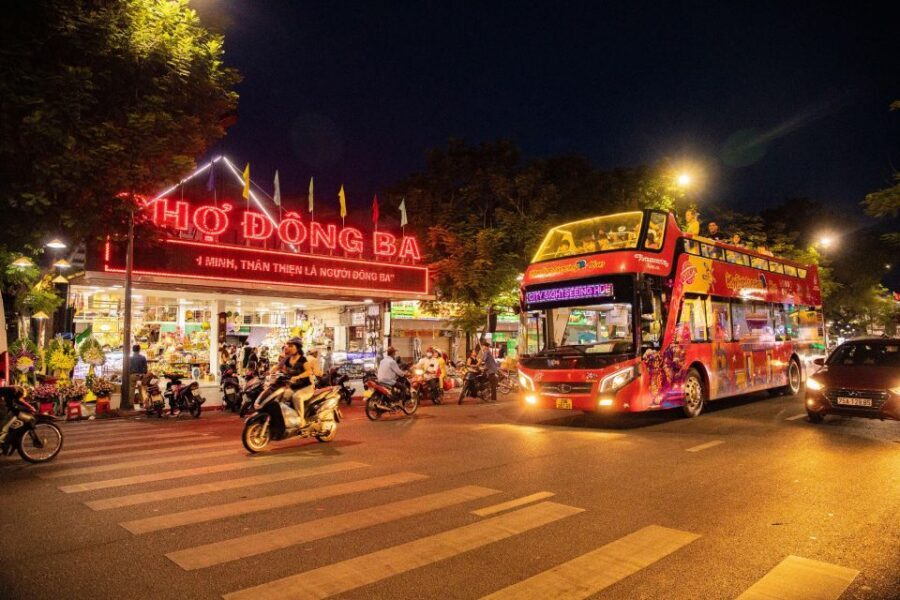
At $19 per person, this is the kind of tour that feels like value when you use it the right way. You’re not paying for every entrance fee. You’re paying for routes, timing, and context—then you decide how long to stay at each place.
Hue’s top sites are spread out. If you try to hit them by random rideshares all day, you’ll lose time (and money) bouncing around. A hop-on hop-off bus gives you a “moving base” that keeps the day organized.
My favorite part of the format is also the most practical: you can do a quick overview first, then return to the spots that grab you. That’s a big deal in Hue, because the Imperial Citadel and tomb areas can look similar from far away—until you get close.
If you're still narrowing it down, here are other tours in Hue Vietnam we've reviewed.


How the 1–2 day hop-on hop-off works (and why it matters)
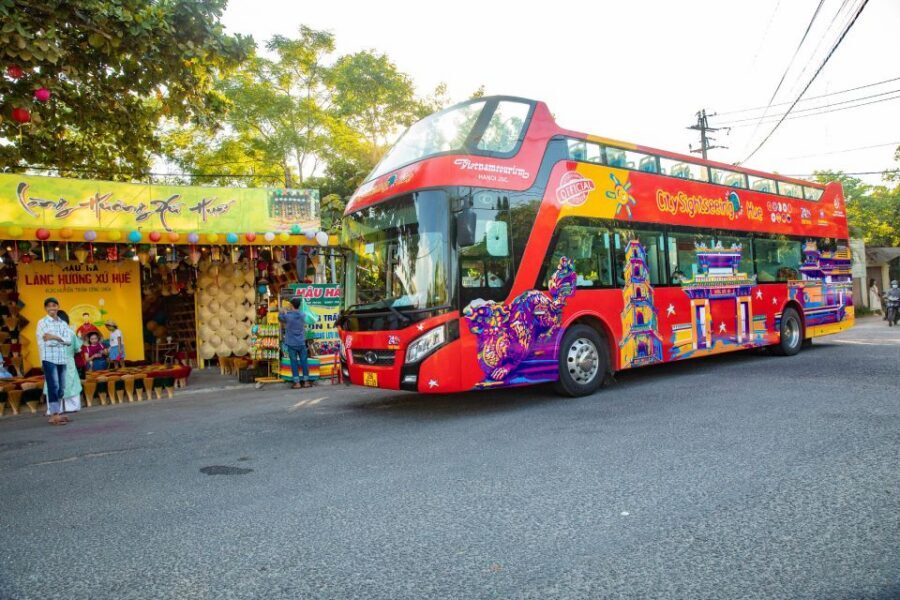
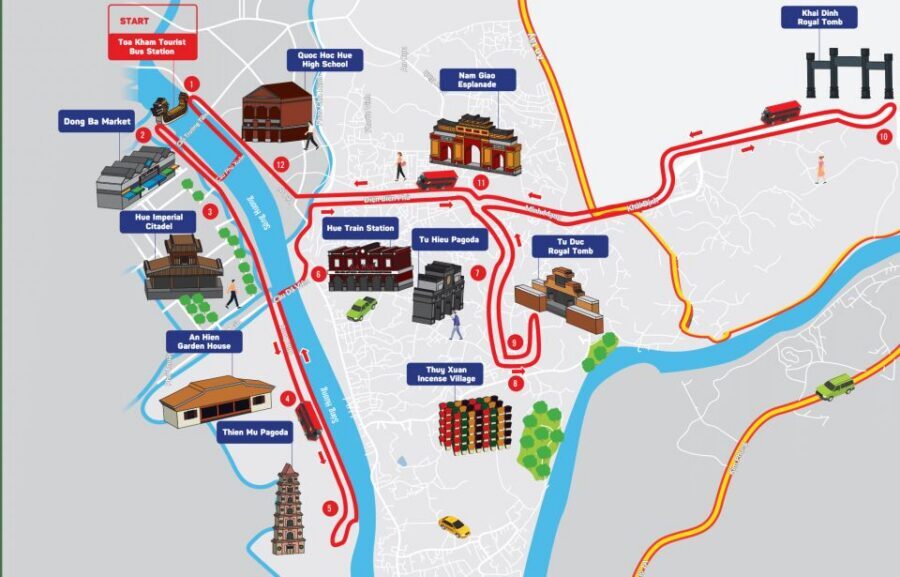
This tour runs as a loop with multiple stops around Hue, and you can hop off as much as you want. The total ride is about 90 minutes, and buses come about every 40 minutes, so you’re not stuck waiting all day.
The first bus departs from Stop 1 at 8:00am, with the last departure at 4:00pm (with a special Lunar New Year schedule noted below). Translation: if you want the full day feel, plan to be on board early and don’t leave the far stops for the last hour.
You can buy a ticket for 1 or 2 days, depending on how much time you have. If you’re only in town one day, you’ll likely pick two or three “anchor” areas. If you have two days, you can spread it out so you’re not sprinting between tombs, pagodas, and markets.
Vouchers, WiFi, and the audio guide setup
You can use mobile or printed paper vouchers, and redemption can happen at any stop along the route. That’s helpful if you’re juggling phone battery anxiety or if you just prefer paper confirmations.
Audio is included and offered in English, Vietnamese, French, Chinese, Korean, Japanese, Spanish, Russian, and German. In plain terms, you’ll be able to understand what you’re seeing without relying on guessing games.
There’s also free WiFi on board. Not a reason to ride, but it helps when you’re waiting for the next bus or checking maps while you’re deciding where to hop next.
Stop by stop: what you’ll actually get at each Hue highlight
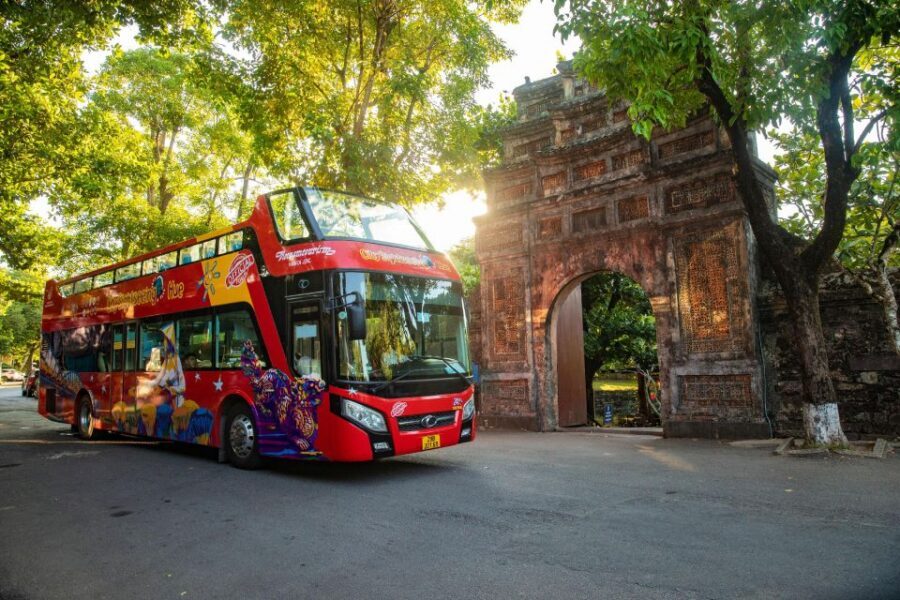
Toa Kham Boat Wharf and Dong Ba Market (start with your senses)
The route begins at Toa Kham Boat Wharf (Stop 1). Even if you’re not doing a boat ride, this is a good launch point because it puts you into the rhythm of the central area fast.
Next is Dong Ba Market. This is where Hue’s everyday life shows up. You can wander through stalls for spices, souvenirs, and snacks, and you’ll have room to browse without feeling trapped in a tour script.
One food tip that’s very specific: try Banh Khoai, the sweet, crispy pancakes people love here. If you’re eating in the market, do it while you’re fresh—once you start stacking pagodas and tombs, the “I’ll eat later” plan gets harder.
Practical drawback: markets are busy by nature, and you’ll want to keep an eye on your belongings. Also, entry isn’t the issue here. Your main risk is time—Dong Ba can steal an entire hour if you let it.






Hue Imperial Citadel: UNESCO, gates, temples, and the guard ceremony
This is the big one. The bus goes to Hue Imperial Citadel (Stop 3), and the area is part of a UNESCO World Heritage site. If you care about Vietnamese history, this is the stop that usually turns a casual day into a memorable one.
You’ll also see the Hue Museum of Royal Antiquities mentioned as a must for history lovers. Since the museum is tied to the Imperial Citadel theme, you’ll want to plan enough time here to match what you’re interested in—especially if museum exhibits are your style.
Don’t treat this like a quick photo stop. The Imperial Citadel reads like a mini-city. Gates, palace spaces, and temples can feel connected, but each section has its own focus. Give yourself time to walk, not just glance.
A highlight to plan around: the changing of the guard ceremony. If it’s happening when you’re there, stick around. It’s one of the few “live moments” that can make the visit feel extra real.
Time consideration: because the bus route loops and buses run about every 40 minutes, you’ll want to commit to your schedule. If you stay too long at the citadel, you might feel rushed later.
An Hien Garden House: a calmer intermission
An Hien Garden House (Stop 4) is a change of pace. It’s the kind of stop that can help break up the day so you don’t feel like you’re “tombed out” by lunchtime.
The benefit of a hop-on format is you can use this type of stop as recovery time. Sit, look around, and reset before heading to the more visually dramatic spiritual and tomb sites.
The limitation: the more you stop randomly, the harder it becomes to fit in the far tomb areas. Think of this as a breather, not an extra half-day.
Thien Mu Pagoda and Tu Hieu Pagoda: spiritual landmarks with a slower vibe
Next is Thien Mu Pagoda (Stop 5). Pagodas in Hue aren’t just architecture. They’re part of how people understand place and spirituality, and they’re often a good point to slow down for a short walk and photos.
Then the bus hits Tu Hieu Pagoda (Stop 7). This gives you a second temple stop without having to reorganize your whole day around it.
If you’re traveling in rainy season, plan smarter: weather affects walking and comfort more than you expect. When it’s wet, you might prefer the lower deck seating or shorter stretches between stops.
Hue Train Station and Pilgrimage Village: useful context stops
Hue Train Station (Stop 6) can be handy if you’re checking transit times or simply want a landmark that anchors you in the city. It’s also a practical stop if you decide you’ve had enough walking for the day and want an easy reset point.
Pilgrimage Village (Stop 8) adds another layer to the story of Hue. It’s a reminder that religious life and daily routines overlap here, and that the area isn’t only about monuments—it’s also about people.
Time reality check: these stops can be interesting, but they’re not always the main “wow” compared with the citadel and tombs. Keep them in your plan so you don’t miss them, but don’t let them crowd out your top two priorities.
Tu Duc Tomb and Khai Dinh Tomb: emperors, design, and the long walk test
Two major tomb stops anchor the back half of the route: Tu Duc Tomb (Stop 9) and Khai Dinh Tomb (Stop 10). This is where Hue becomes dramatic—large, detailed sites that take time.
At Tu Duc Tomb, you’re looking at the resting place of Emperor Tu Duc and his Empress. The story here is tied to a life of luxury, and it’s the kind of place where you’ll understand why a ruler wanted beauty and comfort even in death.
Khai Dinh Tomb is different in feel. It’s another major name on the tomb circuit, and it’s worth treating as its own experience rather than a checklist item. If you only have one day, this is where you decide what you personally want more: maximum walking at two tombs, or more time at one.
Time consideration: tomb sites often involve stairs, paths, and long viewpoints. Your biggest enemy here is not cost. It’s fatigue.
Nam Giao Explanade and Quoc Hoc Hue: final stops with viewpoint potential
Nam Giao Explanade (Stop 11) and Quoc Hoc Hue (Stop 12) close out the route. These are the types of stops that can feel more “outside the main flow” than the citadel and market, but they still matter if you want the full picture of Hue.
If you’re doing a 2-day ticket, this is where you can come back and see what you missed earlier. If you’re doing 1 day, treat these as bonus moments and don’t let them steal your core time.
Timing tips: make the bus work for you

This tour’s rhythm is simple: 90 minutes per loop, buses every 40 minutes, and hop-on access at the stops. That’s great—until your day becomes too tightly packed.
Here are the practical ways to stay in control:
- Start early (first departure is 8:00am) if you want freedom at the Imperial Citadel.
- Pick your top two ticketed areas and budget time for them first, then fill in pagodas and markets.
- If the audio is glitchy, reposition. When seating changes help, it’s usually because sound can depend on where you sit.
- If it’s raining hard, plan for shorter walks. One rainy-day reality is you may not enjoy the upper deck experience as much.
Also, remember: entry to attractions isn’t included. The bus can drop you right at the entrance area, but you still need tickets for what you actually want to see inside.
When things go wrong (and how to protect your day)

No tour runs like a robot, especially in a schedule-driven city loop. There can be day-to-day hiccups like buses not arriving when expected or timing that feels off.
What I recommend is building a buffer:
- Don’t schedule another transport connection right after the last bus window.
- If you’re depending on the bus to reach a specific timed activity, keep a backup plan (a taxi or a partial reroute) in mind.
The good news is the tour is designed for flexibility. If you miss a bus, you can often catch the next one and still keep your day moving.
Special date note: Lunar New Year adjustments

On February 16th, the tour isn’t operating due to Lunar New Year. On February 17th, it runs from 10:15am until 9pm instead. If your dates fall close to that window, double-check the start times you’re working with so you don’t plan around the standard 8:00am to 4:00pm flow.
Who this is best for (and who should reconsider)

This tour is ideal if you:
- Want an easy way to get your bearings in Hue fast
- Like history but also want time for shopping and food at places like Dong Ba Market
- Prefer to choose your own pace instead of following a strict guided group schedule
- Have 1–2 days and want the biggest “Hue highlights” without heavy planning
It may be less ideal if you:
- Have extremely tight timing and want zero waiting between segments
- Expect that the bus itself counts as the whole experience (you’ll still need to step off and walk)
- Want to spend long, slow hours at multiple ticketed sites in a single loop without buffer time
Should you book Hue’s hop-on hop-off bus?
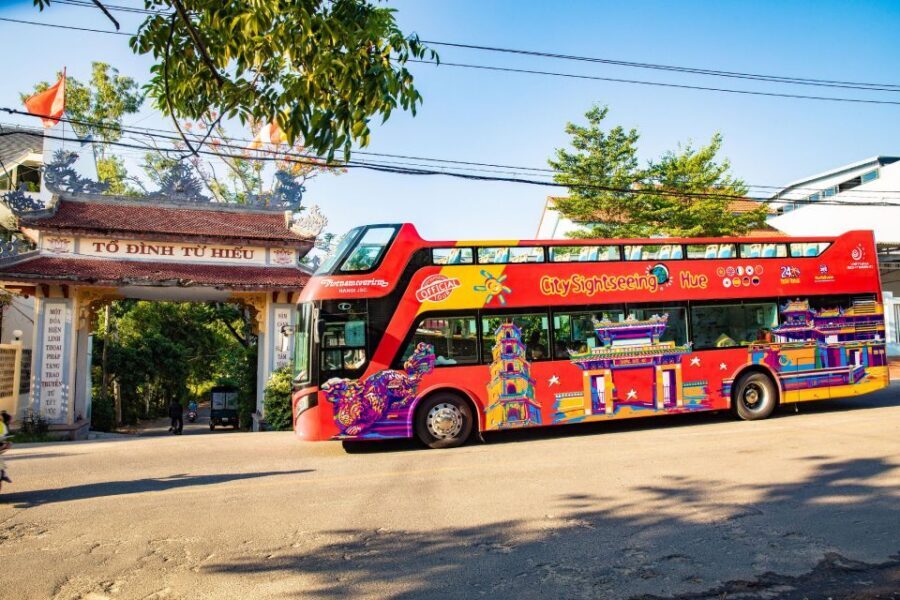
I’d book this if you want an efficient, low-stress way to see Hue’s essentials and you’re comfortable doing your own pacing once you’re dropped at each stop. With multilingual audio, strong landmark coverage, and the option to go for 1 or 2 days, it’s a good match for first-time planning.
Skip it or rethink the approach if your schedule is unforgiving. With a 90-minute loop and buses about every 40 minutes, your day only works if you plan around those gaps and give your top attractions enough time.
If you’re the kind of traveler who likes options—market first, citadel later, pagoda in the afternoon—this bus helps you keep control of the day.
FAQ
How long is the bus route, and how often does the bus run?
The tour loop takes about 90 minutes, and the bus frequency is every 40 minutes.
What languages is the audio guide available in?
The audio guide is available in English, Vietnamese, French, Chinese, Korean, Japanese, Spanish, Russian, and German.
Can I use a mobile voucher, or do I need printed tickets?
Both mobile and printed paper vouchers are accepted, and you can redeem them at any of the stops along the route.
What time do the first and last buses depart?
The first tour departs from Stop 1 at 8:00am, and the last tour departs from Stop 1 at 4:00pm.
Is the tour wheelchair accessible, and are pets allowed?
Wheelchair accessibility is listed as available. Pets are not allowed.
Are attraction entry tickets included?
Entry to attractions is not included. The tour includes stops near major sights, but you’ll need separate tickets for entrances.