REVIEW · HUE VIETNAM
Hue Imperial City and Forbidden City Walking Private Tour
Book on GetYourGuide →Operated by Samtour Vietnam Company · Bookable on GetYourGuide
Imperial Hue starts making sense fast. This Hue Imperial City and Forbidden City private tour is built around big names like Thái Hòa Palace and the oldest Duyệt Thị Đường theater, then explains what they meant in daily court life. I especially like how guides such as Austin and Nhi are praised for clear, story-driven dynastic context, not just building facts.
What I love most: you get a 150-minute guided walk that hits the main architecture in a sensible order, and you also learn the why behind the walls, gates, and rituals, including the court-only logic of the Forbidden Purple City.
One drawback to plan for: Imperial City tickets are not included, so you’ll want cash VND ready so you’re not stuck waiting around.
In This Review
- Key highlights worth your time
- Hue Imperial City: why this private walk feels like a timeline
- Meeting by the bronze cannons, then learning how Hue projects power
- Ngọ Môn Huế and Thái Hòa Palace: the gates that controlled who belonged
- The Forbidden Purple City concept: knowing what you can’t enter
- Duyệt Thị Đường theater: when court culture wasn’t backstage
- Thiệu Phương Garden and Thái Bình Lâu: slowing down inside royal calm
- Kiến Trung Palace restored in 2024: what rebuilding changes for you
- The Queen Mother and the state temples: power has more than one face
- Cửu Đỉnh Huế and Hiển Lâm Các: the court’s long memory in bronze and stone
- Price and value: what $23 buys, and what it doesn’t
- Who this tour fits best (and who might want a different style)
- Small practical tips that make the day smoother
- Should you book this private Hue Imperial City and Forbidden City walking tour?
- FAQ
- How long is the Hue Imperial City and Forbidden City walking private tour?
- Where do I meet the guide?
- Is the Imperial City entrance ticket included in the tour price?
- Are there combo ticket options to save money?
- Do I get hotel pickup and drop-off?
- Is there free cancellation?
Key highlights worth your time
- Nine Holy Cannons meeting point near Cửa Ngăn, so you start with Hue’s metalwork authority, not a random plaza
- Ngọ Môn Huế and Thái Hòa Palace explained as key power points of the Nguyen court
- Duyệt Thị Đường Royal Theater as the oldest preserved Nguyen-era theater out of four
- Royal gardens and quiet pavilions, including Thiệu Phương Garden and Thái Bình Lâu for a slower pace
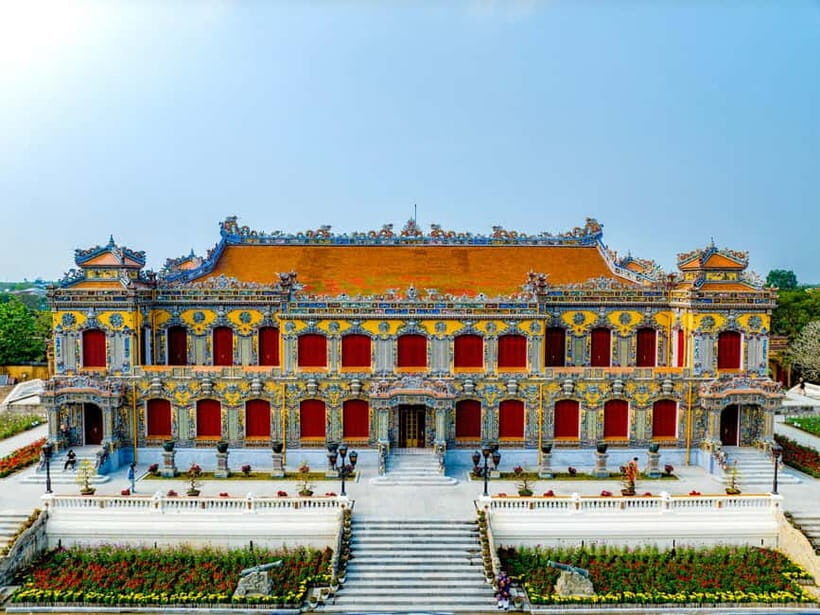
- Kiến Trung Palace rebuilt in 2024, a rare chance to see how restoration shapes what you experience today
- Nine Dynastic Urns (Cửu Đỉnh Huế) tied to Emperor Minh Mạng’s 1835 commissions and their 162 carved images
Hue Imperial City: why this private walk feels like a timeline
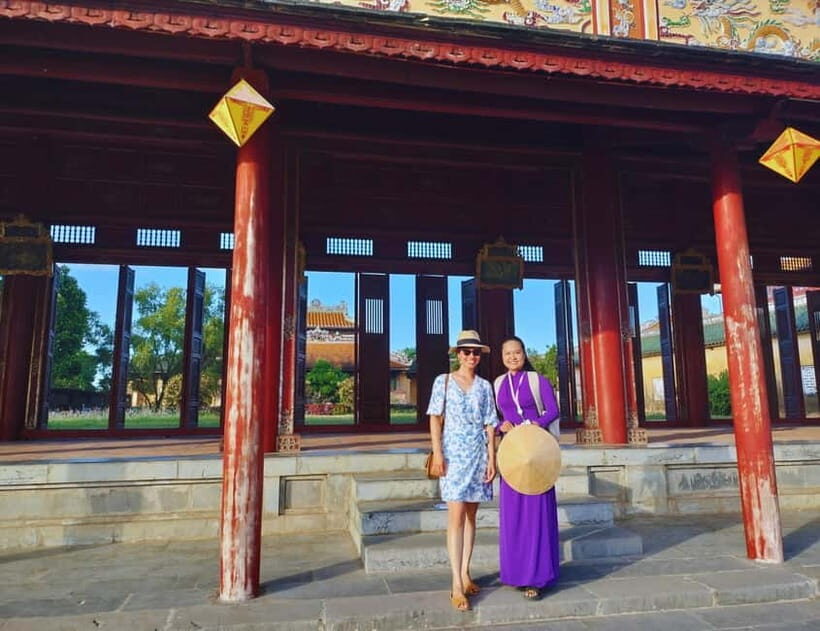
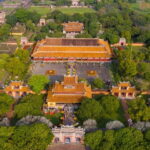
If you’re in Hue for a short window, this tour is a smart way to get your bearings. You move through the Nguyen-era layout in a guided sequence, so the gates and palaces stop feeling like random photo stops and start clicking into place as a system of rules, rank, and ceremony.
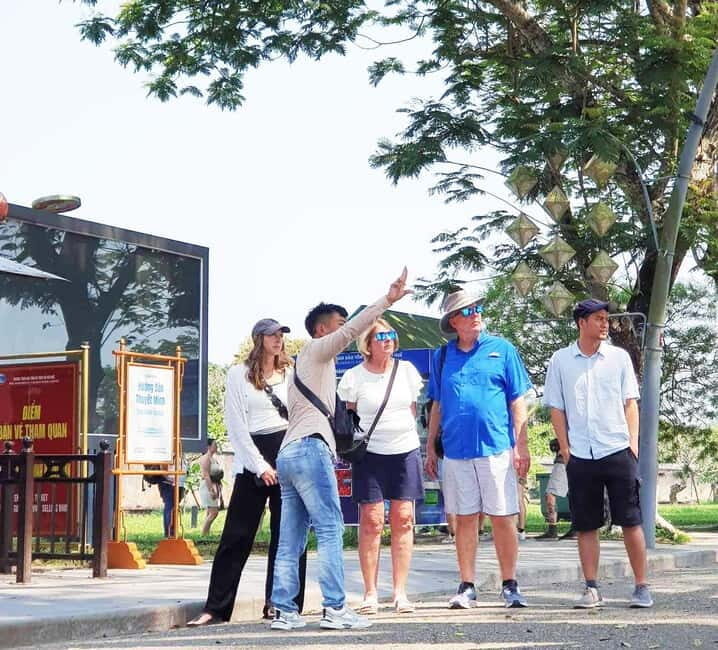
I like that the tour is private, so the pace can stay relaxed even when you pause for questions. In many recent experiences, guides such as Ha and Anna are highlighted for keeping the walk easy to follow, including when weather gets messy. That matters because Hue’s imperial sites can look similar at first glance, and you need someone to translate what you’re seeing.
Your main planning note is simple: you’ll be buying entrance tickets separately. The tour provider helps you with ticket purchase so you spend less time queueing, but you still need the budget ready and a little cash discipline.
If you're still narrowing it down, here are other tours in Hue Vietnam we've reviewed.

Meeting by the bronze cannons, then learning how Hue projects power
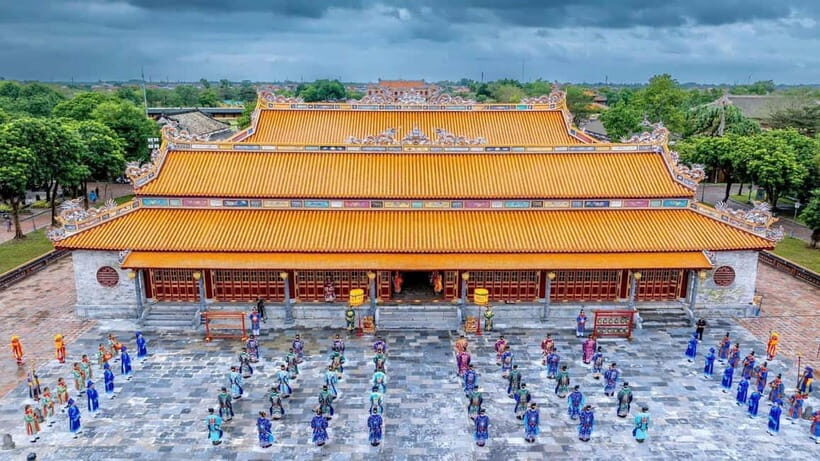
The tour begins near the 4 Bronze Cannons area close to Cửa Ngăn (Ngan Gate), with a guide holding an A4 paper with your name. It’s a strong start point because it grounds the day in something physical and specific. Those cannons were cast in 1803, and your guide uses that fact to talk about how the Nguyen court built power that people could see and feel.
From there, you head toward the flag-and-gate zone. The stop at the Flag Tower (Kỳ Đài Huế) isn’t just for photos. It’s where you learn the tower’s role as the royal court’s flag-bearing site, located on the south face of the Hue Citadel. That direction detail sounds small, but when your guide points it out, you start noticing how Hue’s architecture is designed to be read from particular angles.
If you like to take your time and get oriented, this opening works well. It also helps you understand what comes next: the system of controlled movement through gates and courtyards.
Ngọ Môn Huế and Thái Hòa Palace: the gates that controlled who belonged
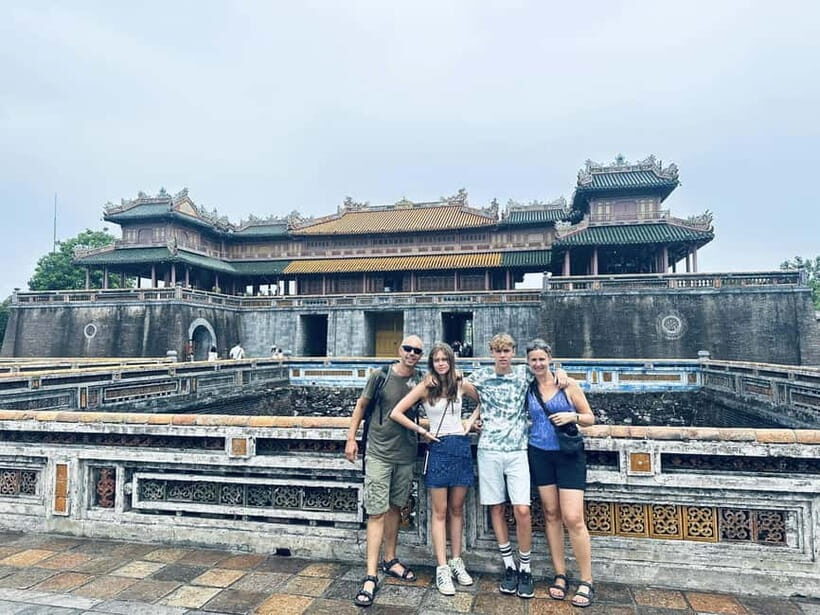
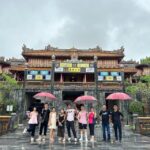
A highlight early in the walk is Cửa Ngọ Môn Huế (Noon Gate), built in 1833. You’re told it’s reserved for the king or used to welcome envoys. That single job description changes how you look at the gate. You stop seeing it as an oversized entrance and start seeing it as a stage door with strict rules.
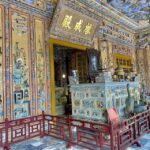
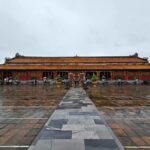
You also visit the Thái Hòa Palace (Điện Thái Hòa), the coronation place of 13 Nguyen kings. This is one of those locations where the building size and craftsmanship make sense once you understand the function. Your guide ties the space to imperial ceremony, so it feels less like walking past ruins and more like stepping into a political ritual.
Time-wise, it’s quick at each stop, but not rushed. The tour’s structure is designed to keep momentum while still giving you guided context. If you’re the type who normally takes too many photos and then misses the meaning, this pacing helps.
The Forbidden Purple City concept: knowing what you can’t enter
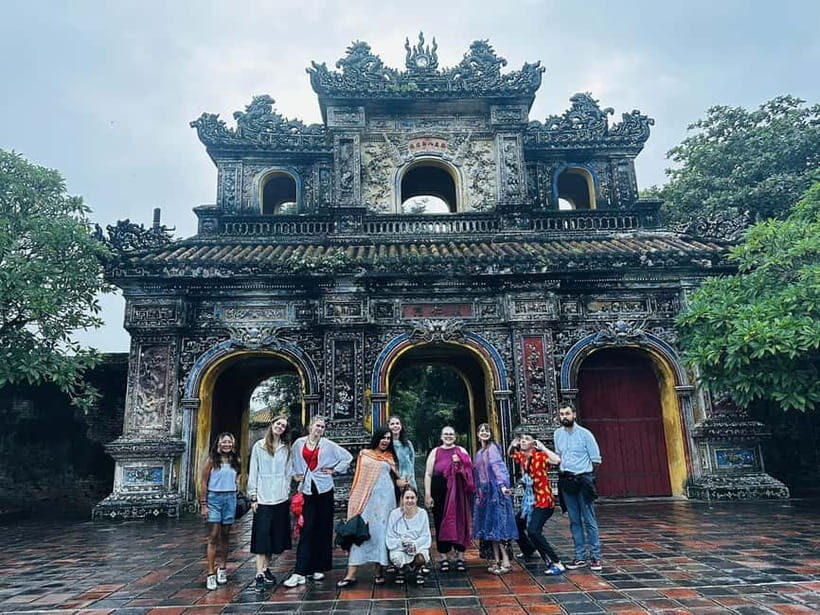
Even when the Forbidden Purple City isn’t the only physical stop you make, the tour uses it as a lens. You learn that the Forbidden Purple City (Tử Cấm Thành) was reserved for the king and royal family, while mandarins and civilians were not allowed to come close.
That detail matters. Without it, imperial spaces can feel like a museum layout. With it, you start understanding the emotional effect of the architecture: distance becomes a statement, and access becomes policy.
On this route, your guide’s job is to keep that logic clear as you move from gate to palace and from one courtyard function to another. I like this approach because it’s memorable. You don’t just learn terms like palace and pavilion; you learn what the court expected people to do—or not do.
Duyệt Thị Đường theater: when court culture wasn’t backstage
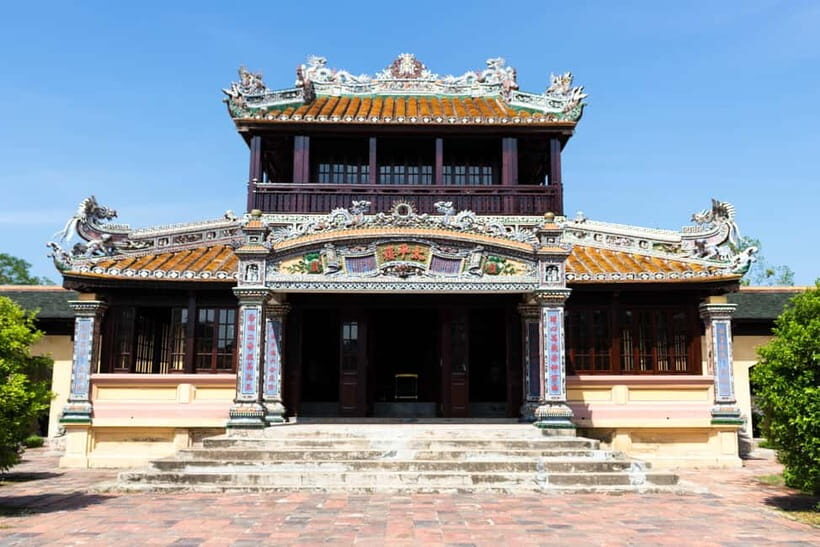
Next up is Duyệt Thị Đường Royal Theater, described as one of four theaters built during the Nguyen Dynasty and also the oldest preserved one. Many visitors focus only on palaces and forget that court culture had a performance side, too. This stop fixes that.
Your guide points out how the theater fits the larger idea of the court staging power. It’s not entertainment separated from politics; it’s entertainment inside the system. Even a short stop gives you enough context to see the space with your brain switched on.
If you’ve ever wondered why imperial cities feel so ceremonial, this is one of the best places to get an answer. It’s also a good pause in the walk because a theater gives you a different kind of mental focus than gates and palaces.




Thiệu Phương Garden and Thái Bình Lâu: slowing down inside royal calm
After the more formal court spaces, you shift to softer architecture and atmosphere. Thiệu Phương Garden (Vườn Thiệu Phương) was built in 1828, described as a typical Nguyen royal garden. Your guide helps you read the garden like design, not just greenery.
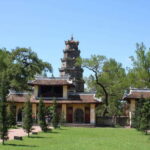
Then you visit Thái Bình Pavilion (Thái Bình Lâu), built between 1919 and 1921 as a place for the king to rest and relax. The timing is useful because it gives you a bridge beyond the earliest imperial period. You can feel the dynasty’s later phase reflected in the change from strict ceremony to controlled comfort.
These stops are where I’d expect you to start taking fewer fast photos and more observational ones. Look for how the pavilions and garden layouts support rest, sightlines, and movement. Even if you only get around 10–15 minutes per stop, the guided framing helps you catch what you’d otherwise miss.
Kiến Trung Palace restored in 2024: what rebuilding changes for you
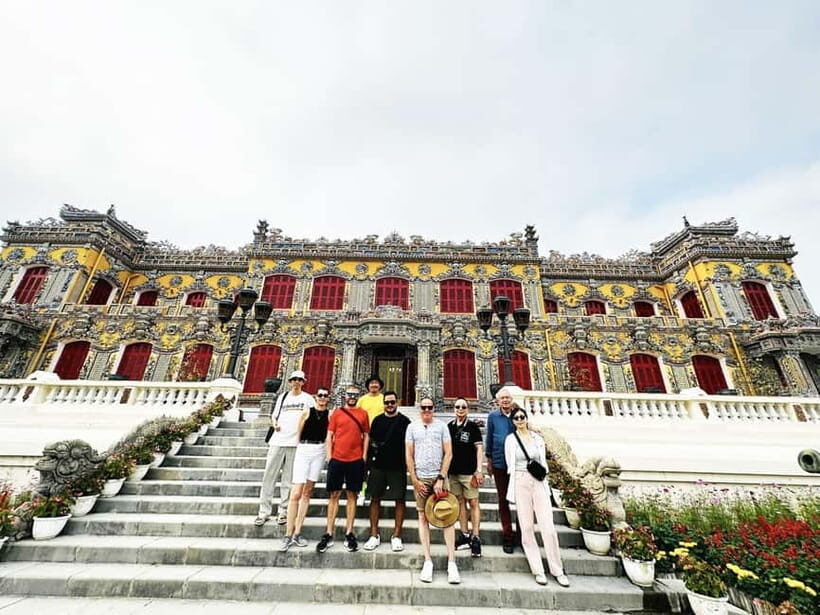
One of the most interesting modern details on the walk is Kiến Trung Palace (Điện Kiến Trung). It was built in 1923, noted for mixing Asian and European architectural elements. The other key fact: it collapsed and was restored in 2024.
This stop is valuable even if you’re not an architecture nerd. Restoration changes what you see. It can make carvings crisper, surfaces more legible, and shapes easier to interpret, but it also changes the emotional weight of a “lost” space. Your guide’s explanation helps you hold both ideas at once: the palace is still a Nguyen-era product, but your view today includes modern recovery work.
If you’re trying to understand Hue as a living heritage site rather than a frozen backdrop, this is a good place to notice that difference.
The Queen Mother and the state temples: power has more than one face
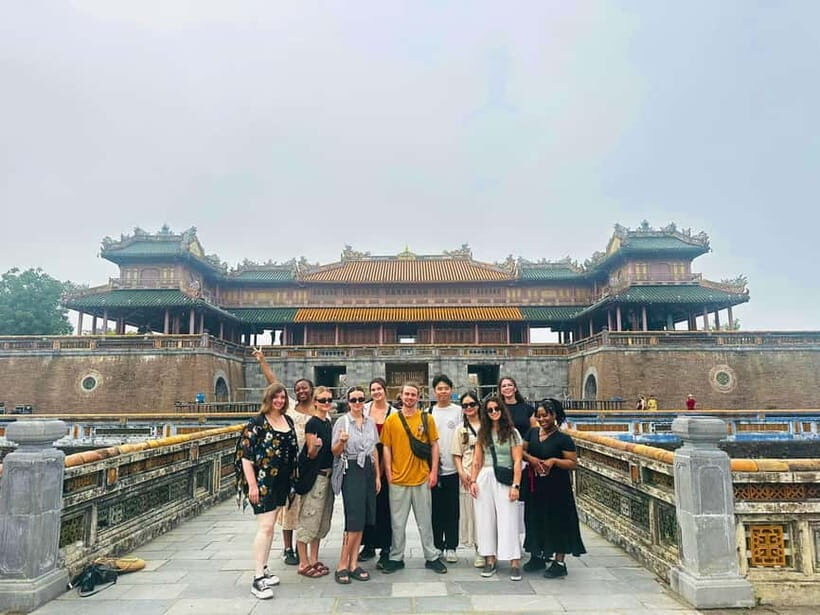
The walk includes Cung Diên Thọ (Dien Tho Palace), the residence of the Queen Mother. You’re told it’s large-scale with exquisite carvings and an elegant style. That matters because it broadens the story from the king’s ceremonial spaces to the influence tied to the royal household.
From there, you visit Hưng Tổ Miếu (Thế Miếu Huế), a temple dedicated to worshiping the 10 Kings of the Nguyen Dynasty. You learn how the court used religious and ancestral spaces to support legitimacy. It’s not only about the present ruler. It’s about maintaining continuity and authority.
For readers who like your history grounded in how people actually organized their lives, these stops are strong. They remind you that “imperial” wasn’t only public ceremony. It was also family power, memory, and ritual.
Cửu Đỉnh Huế and Hiển Lâm Các: the court’s long memory in bronze and stone
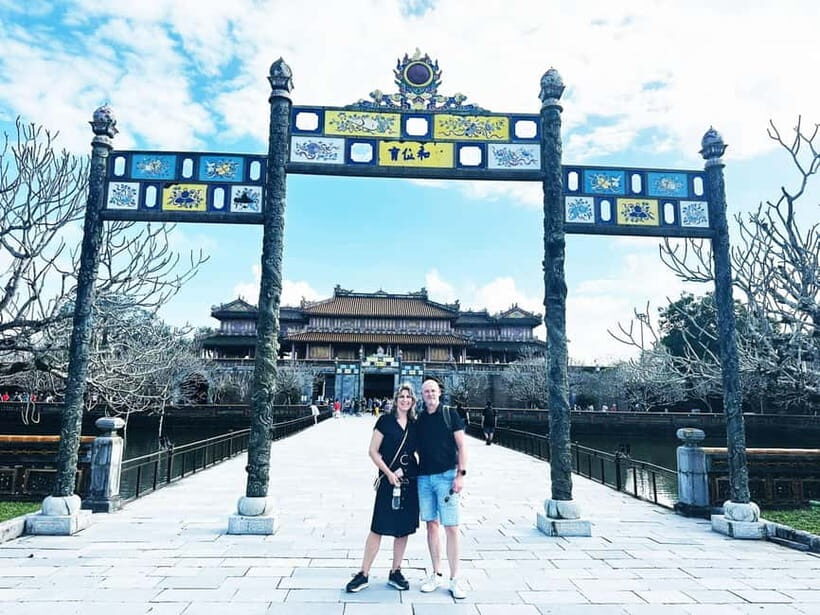
The tour ends with stops that feel like permanent records. The Nine Dynastic Urns (Cửu Đỉnh Huế) were commissioned by Emperor Minh Mạng in 1835. They have 162 images cast and carved across 9 bronze urns. That scale is the kind of fact that sticks. Your guide uses it to explain why these urns aren’t decorative. They’re historical messaging in metal.
Next comes Hien Lâm Pavilion (Hiển Lâm Các), built in 1821–1822, described as a place where emperors had epiphanies. Again, it’s not a random pavilion stop. The concept helps you understand how rulers justified decisions and reflected on leadership inside designed spaces.
The tour finishes at Cửa Hiển Nhơn. By the time you reach the end, you should feel like you’ve followed a storyline, not just crossed grounds.
Price and value: what $23 buys, and what it doesn’t
The tour price is $23 per person for about 150 minutes with an English-speaking guide, bottled water, and private group format. That’s good value in Hue because you’re not just buying access to a site—you’re buying the translation layer that makes all the gates, palaces, and terms usable fast.
The big “doesn’t include” item is entrance tickets to the Imperial City: 200,000 VND per adult. The tour provider also gives you ticket strategy so you can save time and money if you plan to visit tombs. There are combo options: 420,000 VND for Imperial City plus 2 Tombs, or 530,000 VND for Imperial City plus 3 Tombs, valid for 2 days. If you’re doing more of Hue’s royal sites, the combo can be the better deal.
Also, this matters: bring cash VND. The guide assists with ticket purchase specifically to avoid long queue time. If you show up without the right currency, you’ll lose the benefit of having a guide in the first place.
Who this tour fits best (and who might want a different style)
This is a great pick if you want a guided walk that prioritizes meaning. It suits:
- You’re short on time in Hue and want the main Imperial City highlights in one route
- You care about how gates, palaces, and spaces connect to the Nguyen Dynasty, including the court-only logic of the Forbidden Purple City
- You prefer private pacing over group chaos
It might not be the best match if you’re traveling with a strict no-additional-cost mindset, because tickets aren’t included. Also, if you want long gallery-style wandering with no schedule at all, this tour’s structure is more “move with purpose.”
Small practical tips that make the day smoother
Because this is a walking route around major sites, wear shoes you’re comfortable in. Hue weather can turn quickly, and at least one guide experience notes that Anna came prepared with a poncho and helmet during rain. Even if your day stays clear, it’s smart to pack something light for sudden weather shifts.
For photos, plan to use your guide’s timing. Stops are short at each location, so if you wait too long at the first viewpoint, you may feel rushed at the next one.
Finally, ask your guide questions as you go. A lot of the enjoyment here comes from connecting what you’re seeing to what the Nguyen court used it for.
Should you book this private Hue Imperial City and Forbidden City walking tour?
Yes, if you want a fast, guided route that turns Hue’s imperial architecture into a story you can remember. The price is reasonable for a private English-language guide spending about 150 minutes with you, and the stop list hits the key ideas: gates that controlled access, palaces tied to coronation, the oldest preserved royal theater, and the memorial weight of the bronze urns.
I’d especially recommend it to first-timers who don’t want to guess their way through the Forbidden Purple City concept. If you’re comfortable budgeting for the Imperial City entrance ticket and bringing cash VND, this tour is a strong use of a half day in Hue.
FAQ
How long is the Hue Imperial City and Forbidden City walking private tour?
It lasts about 150 minutes, with starting time depending on your requirements. Tours run roughly from 2 hours to 2.5 hours based on the selected schedule.
Where do I meet the guide?
You meet at the 4 Bronze Cannons area near Ngan Gate (Cửa Ngăn). The guide waits with an A4 paper showing your name.
Is the Imperial City entrance ticket included in the tour price?
No. The Imperial City ticket is not included and costs 200,000 VND per adult. The guide can assist you with buying tickets.
Are there combo ticket options to save money?
Yes. A combo is cheaper, such as 420,000 VND for Imperial City with 2 Tombs, or 530,000 VND for Imperial City with 3 Tombs, with validity of 2 days.
Do I get hotel pickup and drop-off?
Hotel pickup and drop-off are available if you choose that option. If not selected, you meet at the stated meeting point.
Is there free cancellation?
Yes. You can cancel up to 24 hours in advance for a full refund.